Ready stance
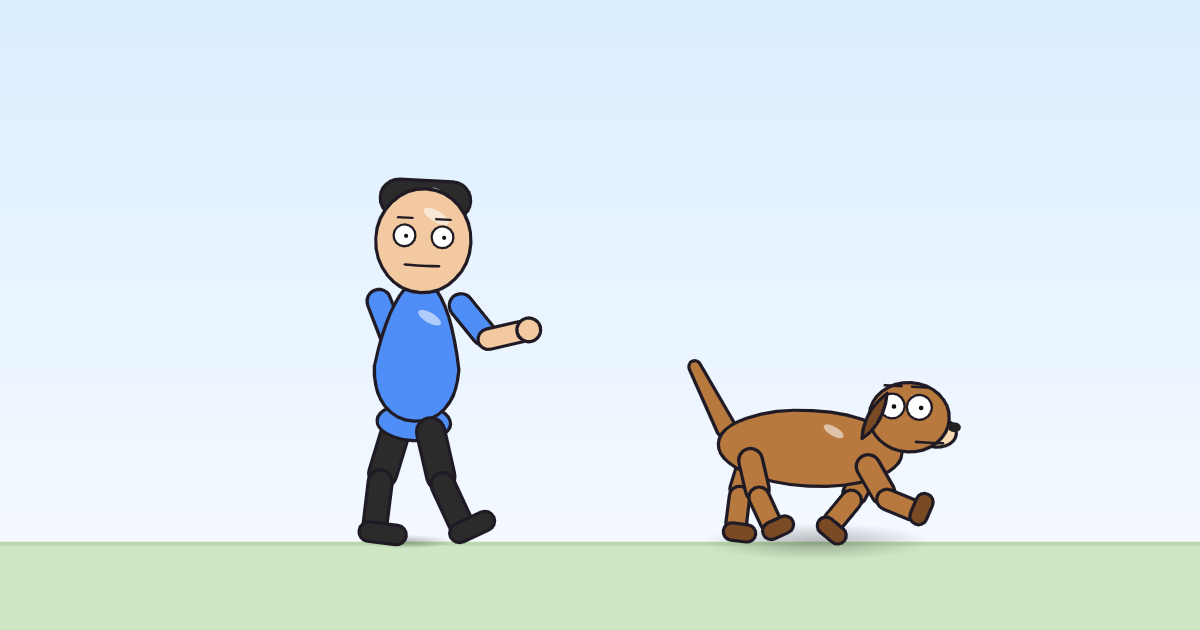
Feet apart, knees bent, hands up; a stance that settles into place once and then just breathes, ready for whatever comes next.
Use it in a cartoonOpen it in the block editorThe pack file (JSON)
What it is for
Ready stance is the pause before a duel, a sports move, or any scene where a character is braced, waiting for something to happen. It is a hold, not a performance: once it settles into the stance it does nothing dramatic, so it can sit under a long pause without wearing the audience out, and another move, Sword swing, can follow straight on from it.
The principle it shows: anticipation
A held, braced pose is itself a kind of anticipation: feet apart, knees bent, hands raised, a shape that tells the audience something is about to happen before anything does. The small, slow breathing sway underneath it keeps the hold from freezing like a photograph while it waits.
The program, line by line
when it starts
  glide right arm 42, right forearm 64, left arm 24, left forearm 58, rot -3, dy 6, right leg 16, right shin 12, left leg -14, left shin 10 over 0.3 s (out)
  forever:
    glide dy 8 over 0.6 s (inout)
    glide dy 6 over 0.6 s (inout)
when it starts— begins when the move is put on a character.glide right arm 42, right forearm 64, left arm 24, left forearm 58, rot -3, dy 6, right leg 16, right shin 12, left leg -14, left shin 10 over 0.3 s (out)— both arms raise and bend, the whole body leans 3 degrees and drops 6 pixels, and both legs bend at the knee: the stance settles in, slowing as it arrives.forever:withglide dy 8 over 0.6 s (inout)andglide dy 6 over 0.6 s (inout)— once in the stance, the body drifts 2 pixels up and down, easing both ways, a slow breathing loop that never stops.
Try this
Bend the right knee to 30 degrees instead of 16. The stance drops into a much deeper, wider-set crouch, more braced for a hit.
In the program:
ramp · to.part:leg:116→30Slow the breathing sway from 0.6 s to 1.5 s each way. The hold now breathes much more slowly, calmer and steadier rather than keyed up.
In the program:
ramp · over0.6→1.5
How it differs from Still and Sword swing
Still holds a character with no motion at all, a deliberate freeze; Ready stance keeps a slow breathing sway going under its hold. Sword swing is the attack this stance waits for: a fast wind-up and strike instead of a held pose.
Works on
| Body | Moves? | What moves |
|---|---|---|
| 2 legs (a person) | yes | whole body, arms, legs |
| 4 legs (a dog) | yes | whole body, front legs, back legs |
| no legs (the monster with no legs) | yes | whole body, arms |