Cartoon moves
A move is a small program that tells a character how to move: hop, sway, wave, walk in, bow. Every move here plays on every character, because it moves body parts by name, and a body without one of those parts leaves it out: a dog doing Hands on hips stands and sways. Every move is free to copy and change.
Each move's page plays it in 3D, by Sunny and Grump (a bird's moves by the gull), explains its program line by line, names the animation principle it shows and gives two changes to try. To make your own, press Change it in the move maker on any move's page and change it, or start a new move.
Entrances and exits
Moves that bring a character into a scene or take it out, by walking, running, flying, sliding or hopping. Most of them start off to one side and end on the character's spot; the exits do the reverse.
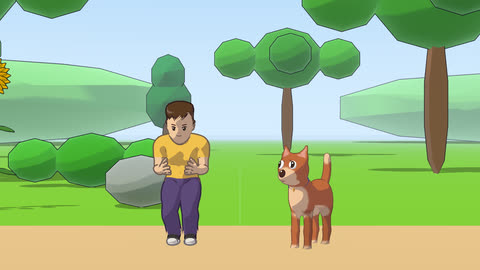 Crawl inHunkered down low, as into a hiding place: the knees fold, the chest leans over them, the arms tuck in, breathing.
 Fly inDown from the sky, the arms beating like wings, the legs trailing, slowing as it comes; a landing with a give in the knees.
 Fly outA crouch, a spring, and away up and off the stage, the arms beating like wings, faster and faster.
 Hop acrossThree little hops sideways across the stage, facing you: a dip, a hop, a soft landing.
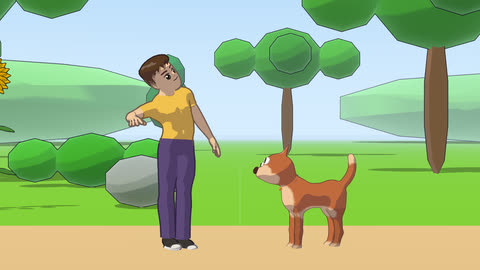 Peek inRound the edge of a door: the head leans out first, the shoulders follow, a hand on the edge, a look.
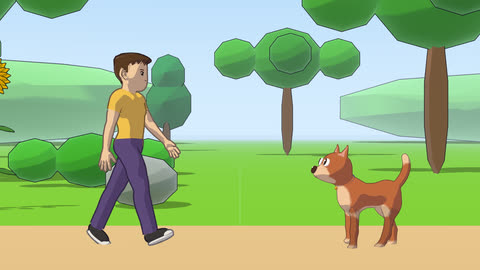 Run inRunning in from the side, leaning into it, the arms pumping; a stopping stamp, then a bounce on the toes, ready.
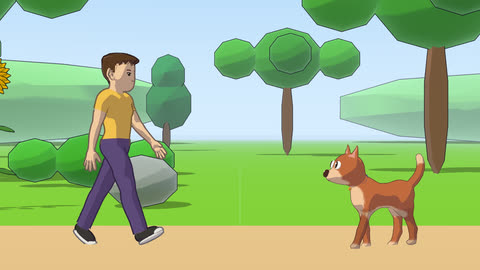 Run off and backA turn, a run off the stage, gone a moment, then back in at a run to stop where it was.
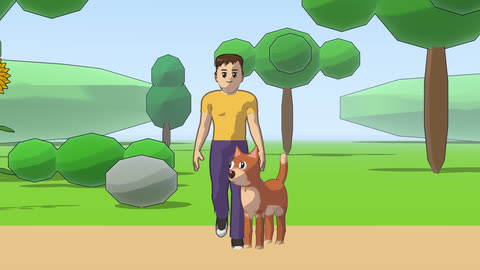 Slide inSlides in from the side standing quite still, as if on ice, arms out for balance, and stops with a give in the knees.
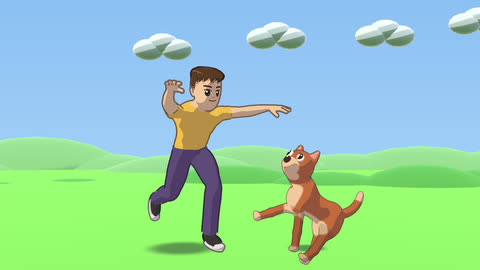 StumbleA trip: the body pitches forward with the arms flying out, and a big quick step catches it.
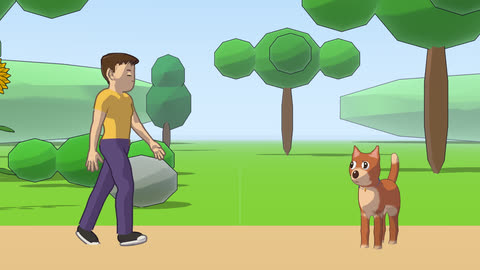
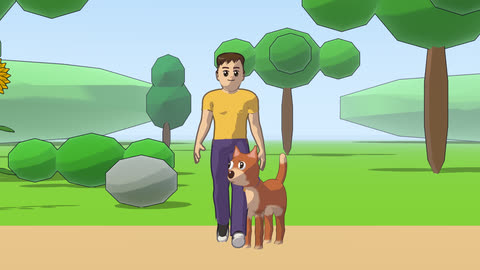
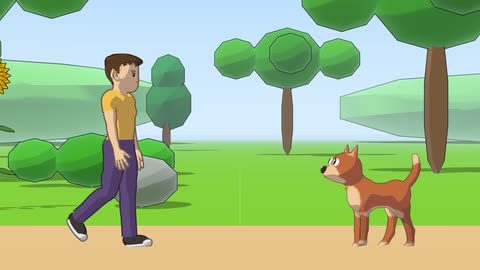 Walk inIn from the side in three steps, the arms swinging against the legs; the trailing foot comes up beside the other, and it stands.
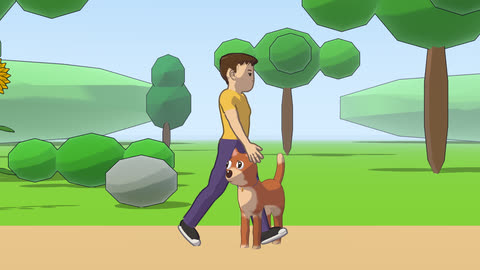
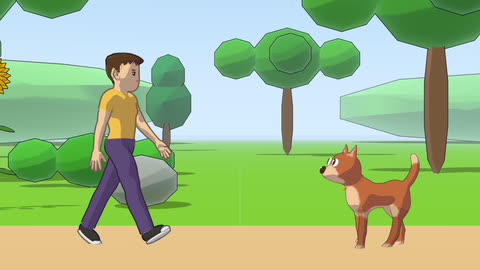 Walk on and offOn from the side, a turn to the front and a wave to everyone, then a turn back and off the way it came.
Feelings
Happy, cross, scared, sad, proud. These moves act out a feeling, from a small happy hop to a furious shake, and most of them are made to play under a line of dialogue.
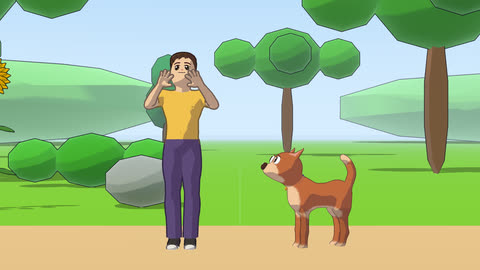 AlarmedLeans back nervously, both hands up in front with the palms out, and flinches now and then, the shoulders jumping up.
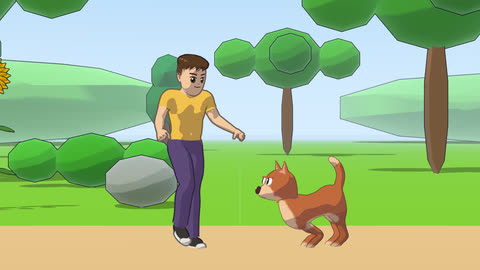 Angry shakeThe fists clenched, the shoulders up, the whole body shaking, then a hard stamp: furious.
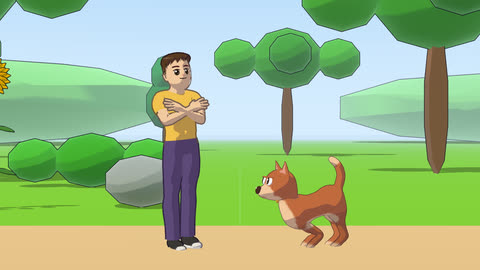 AnnoyedThe arms folded, the weight on one hip, the head rolling up and round with the eyes, and a huff.
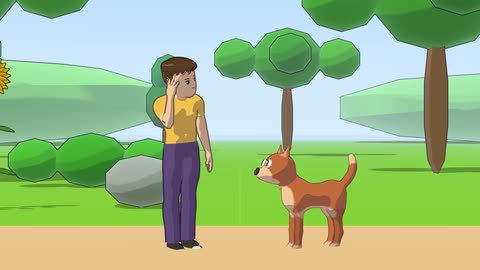 BoredThe weight on one hip, the head dropped into a hand and turned away, and a long, slow sigh.
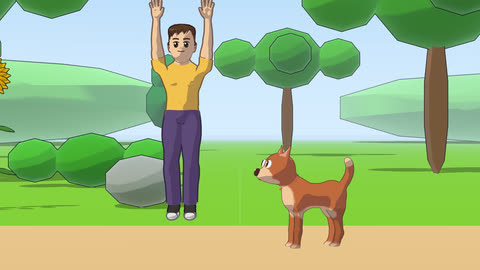 BounceBig springy hops on the spot: a dip, a push off the toes, the arms flying up at the top, a soft landing in the knees.
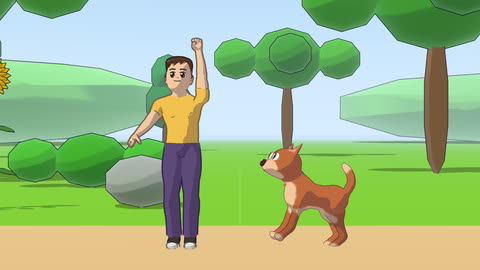 Cheer with pom-pomsOne fist high and the other low, swapping on every beat, the knees giving a little bounce and the head up.
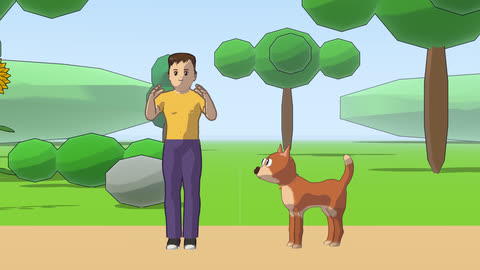 ClapThe hands meet in front of the chest in quick claps, springing apart after each one, the head nodding with them, for as long as it plays.
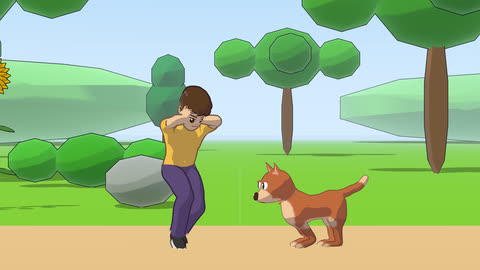 CowerA step back, down low with the back curled and the arms over the head, trembling. It stays down.
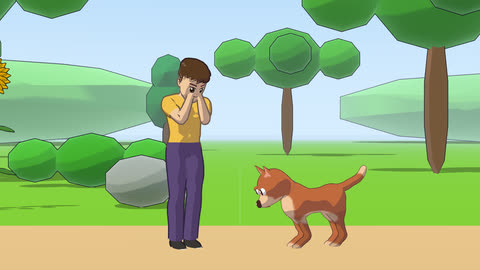 CryThe hands over the face, the head bowed into them, the shoulders heaving with each sob.
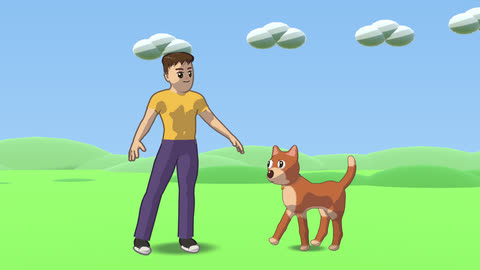 DizzyThe body wobbling round in a circle, the head a beat behind, the arms out, a step to catch the balance.
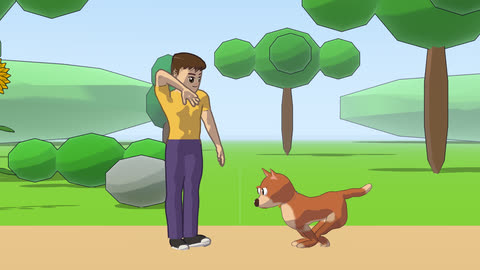 EmbarrassedThe head ducked and turned away, a hand rubbing the back of the neck, a foot scuffing the ground.
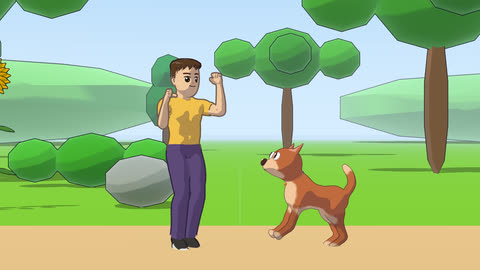 ExcitedBouncing on the spot with the fists pumping in turn: can not wait, can not keep still.
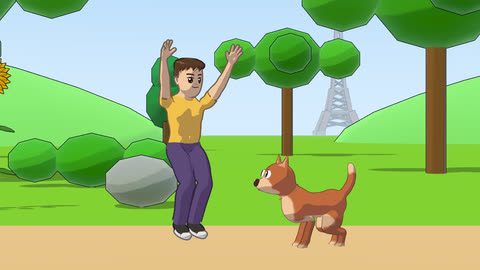
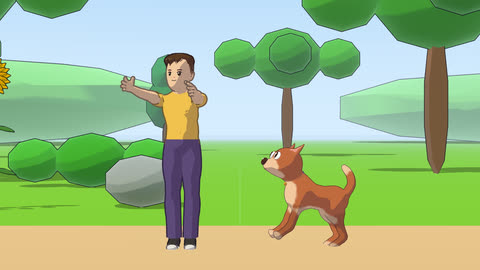
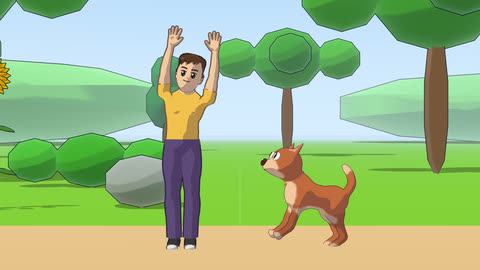 Hands in the airBoth arms high overhead, the chest and the head swaying from side to side on the beat, the feet planted.
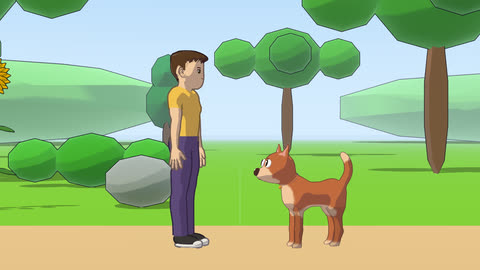 Happy wagThe happiest thing a dog does: the tail swinging from side to side, the ears flapping, a little bounce with every wag.
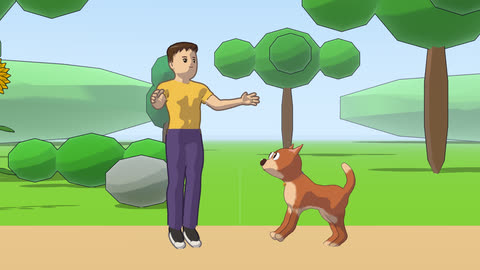 HopQuick, light hops on the toes, the arms lifting loose at the top: the quickest way to look pleased.
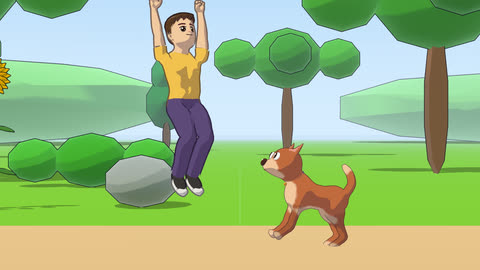 Jump for joyA deep crouch, then a big spring with the arms thrown up in a V and the knees tucked: the best moment of the day.
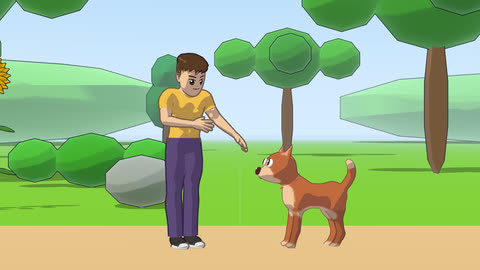 LaughThe shoulders shake, the head goes back and comes forward, one hand on the tummy: a belly laugh.
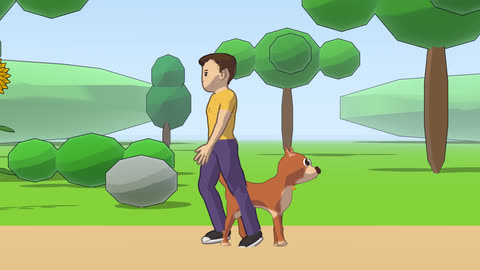 PaceShort, slow steps back and forth, the head down, a slow turn at each end: worried.
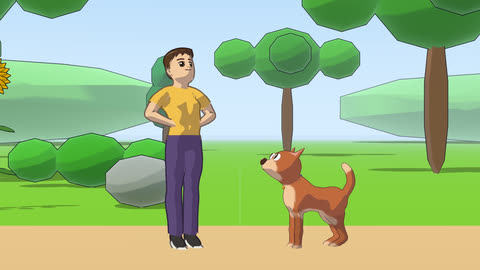 ProudThe chest out, the hands on the hips, the chin up, and a slow rise onto the toes: pleased with itself.
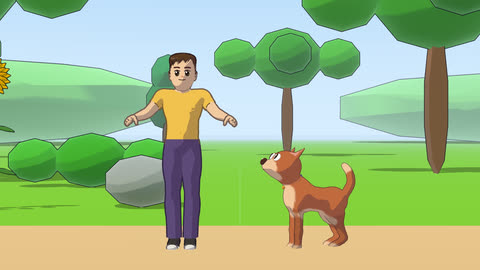 Puff upRage that builds: the chest swells, the shoulders rise, the fists come out from the sides and it shakes, then holds, glaring.
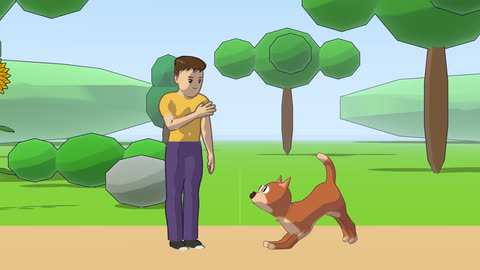 RelievedA big breath in, then a long breath out as the shoulders drop, a hand coming to rest on the chest: phew.
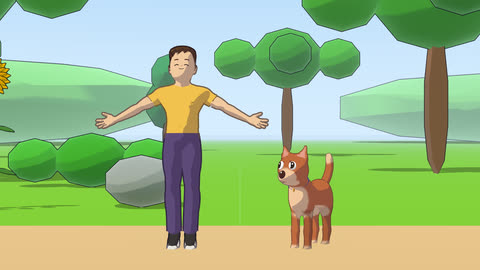 Rise upUp onto the toes, the chest lifting, the arms rising out palms up and the chin up, then a proud bob on the toes.
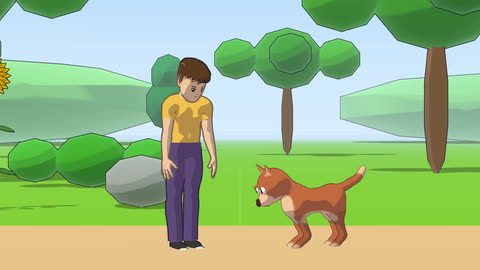 SadThe head low, the shoulders rolled forward, and a slow sigh that lifts the chest and lets it sink.
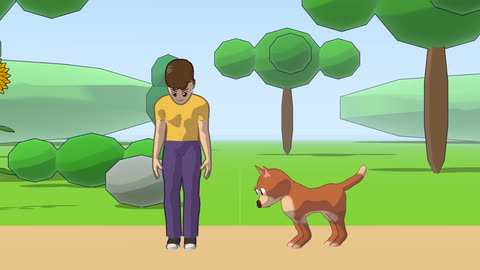 SlumpAll the air goes out: the shoulders drop, the chest folds forward, the head hangs, a small tremble, and it stays sunk.
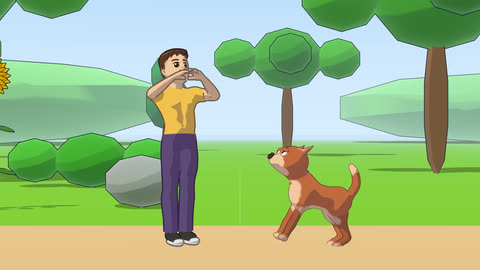 SurprisedA quick jump back, the hands flying up with the fingers open, frozen a moment, then let go.
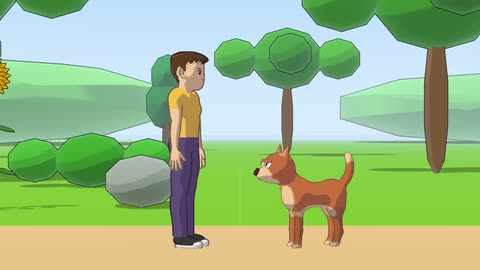 Whip tailA happy tail swish: the tail swings wide from side to side, whipping round from its root, with floppy ears and a little bounce.
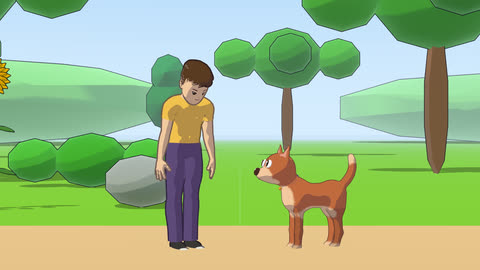 YawnA big stretch with the arms overhead and the head back, then a slump, the head drooping: tired.
Actions and sport
Moves that do something with the body or with a thing in the hand: swing a sword, block, duck, kick a ball, throw and catch, step aside, take a fall and get up. Most of them have a flag at the moment that counts, the hit or the throw, so another character's move can be timed to it.
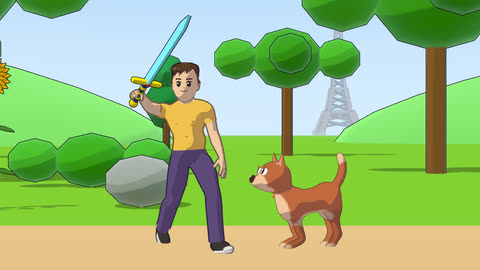 BackhandThe sword drawn low to the left hip, the chest turned with it, then a step in and a backhand cut rising across the front to high right, ending cocked over the right shoulder.
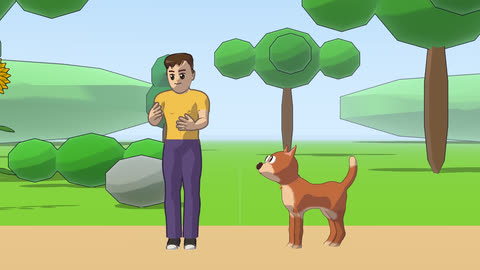 BarkAn animal barks with its voice: its head jerks up and forward on the loud words, its ears up, its mouth open as far as the line is loud.
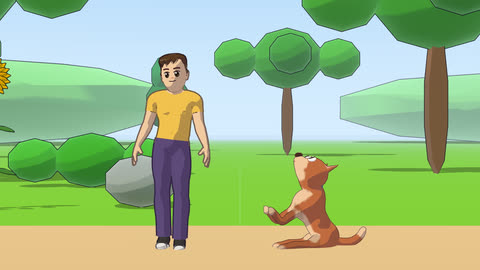
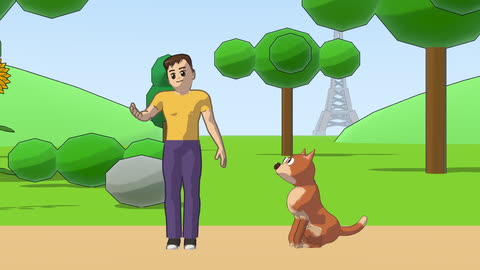 BegUp on its haunches, front paws folded in front of its chest, nose up, bobbing hopefully: an animal on four legs begs.
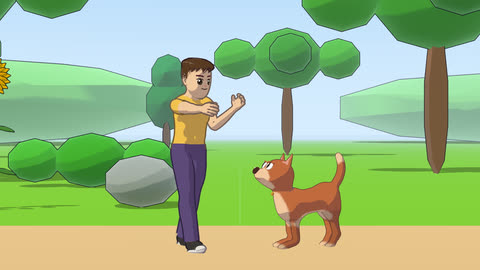 BiteAn animal snaps forward to bite: its head pulls back, then darts out low and fast, and comes back. It hits at the snap.
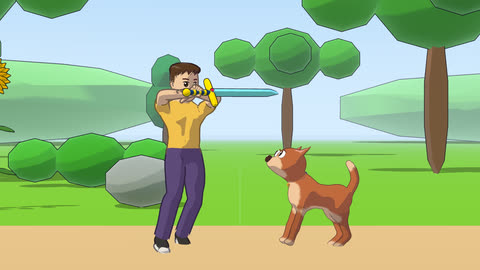 BlockSnaps both arms up into a guard in a fifth of a second and holds it there, braced and tucked, until something else takes over.
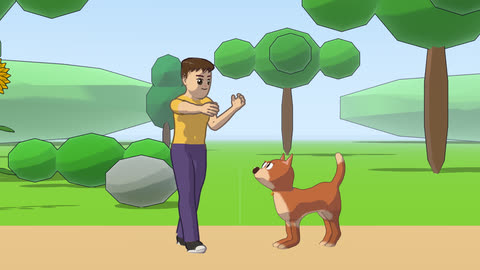 BopA quick soft bop just in front: the fist straight out at chest height, the other up by the chin, held a moment, then back.
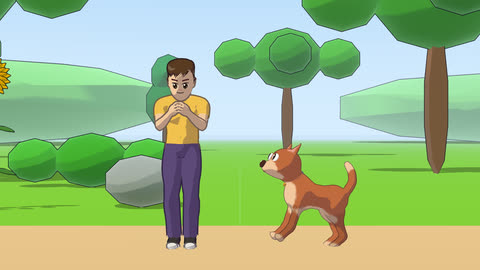 CatchBoth hands out in front, open; the ball lands in them and they give with it, drawing it in to the chest as the knees bend.
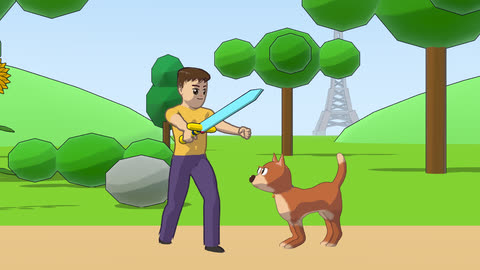 ChopBoth hands up, the sword (or an axe) raised over the head with its blade back, then brought straight down in front with a step in, the knees giving and the body folding into it.
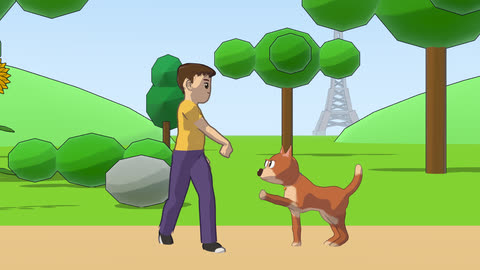 Claw swipeA big four-legged creature rears up, its front left paw drawn up to its chest, and rakes it down at what is before it as its body drops forward.
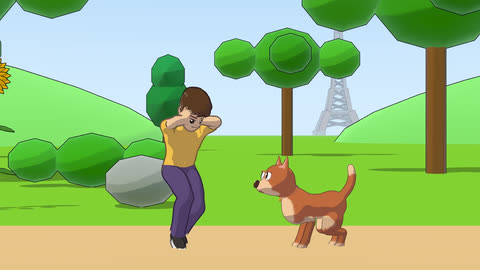 Cower (four legs)Sinks low on bent legs, its head down, its ears flat and its tail tucked under it: an animal on four legs, afraid. It stays so.
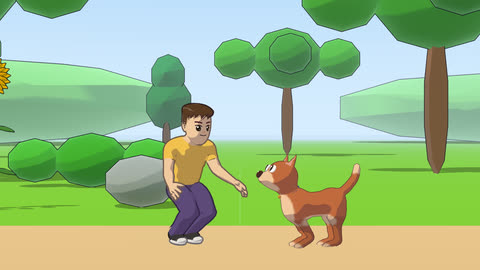 CrouchDown low fast and stays there: the knees bent deep with the feet flat, the arms forward for balance.
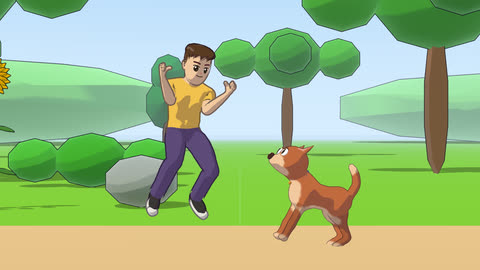 DodgeA quick hop aside: down, a tucked jump with the arms in, landing low on bent knees and back up to the guard (the World moves it to the side; the body does the hop).
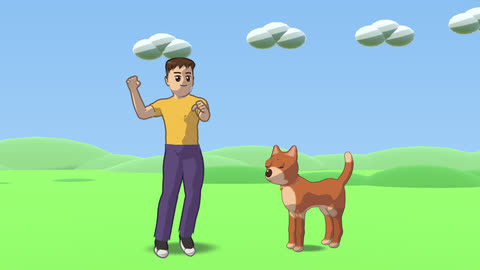 Draw bowAn archer's shot: side-on, the bow arm straight out to the target, the string hand drawn back to the cheek and held, then let go, the hand flicking back.
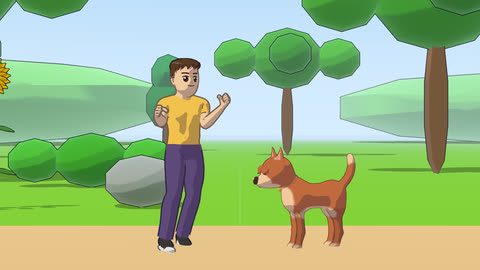 DrinkA flask to the mouth: the hand comes up, the head tips back as it drinks, a breath out, the flask down again.
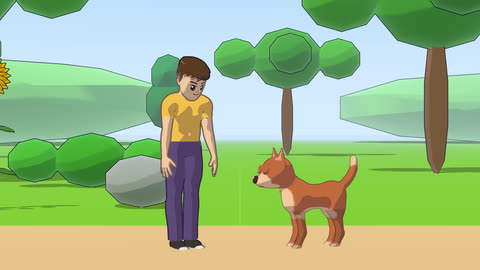 DroopHead and ears down, tail hanging low, the body sinking a little: an animal on four legs, sad. It stays so.
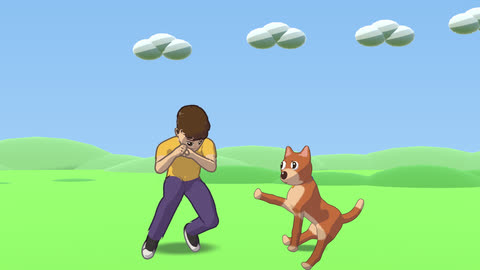 DuckSquashes down to 72% height in a flash, both arms up to shield the head, holds for under half a second, then pops back up.
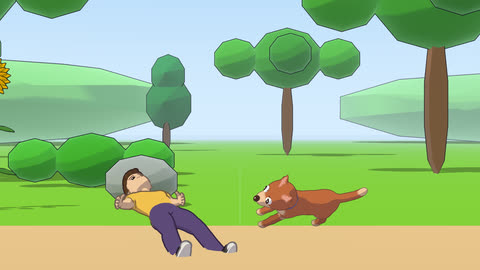 Fall deadFelled: the knees give, it drops over them, topples back and lies on its back, the arms flung out, the eyes closed; still.
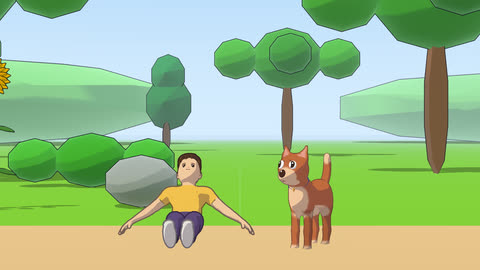 Fall down and get upA slip, the arms flung up, flat on the back with a bump; a moment lying there, then up: sit up, knees up, onto the feet, stand.
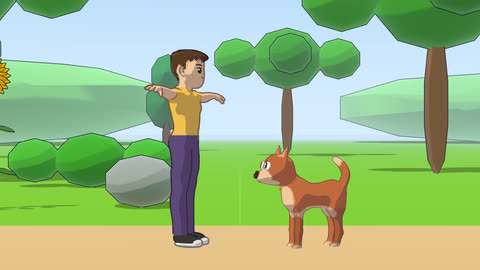 Flap wingsFlaps up and down with a little lift, on the beat: a bird’s wings, a person’s arms out to the sides.
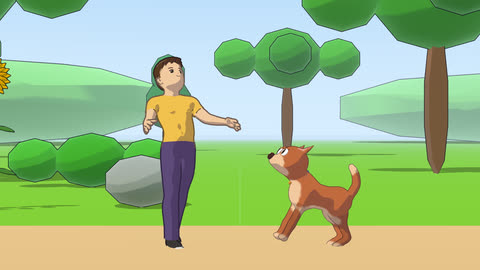 Get boppedBopped: the head snapped back and the eyes shut a moment, thrown back half a step with the arms out, then standing up again.
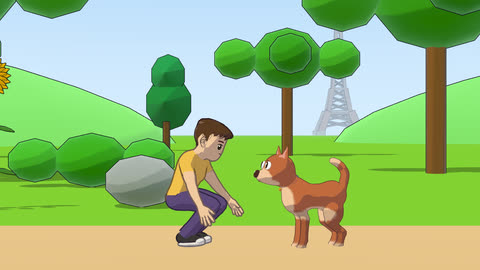 Get upFrom sitting to standing: the front end comes down onto the front paws as the back legs push up, and it stands, tail up.
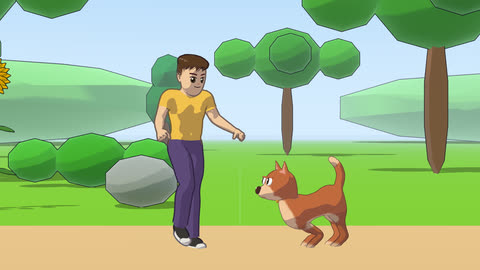 GrowlFront end low and braced, head low and forward, ears back, tail stiff and up: an animal on four legs, angry. It stays so.
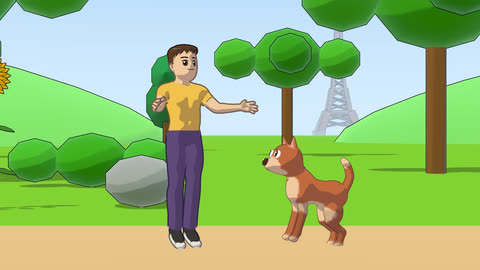 Happy hopFront end bouncing up and down, tail swinging side to side, ears up, happy, round and round: an animal on four legs, overjoyed.
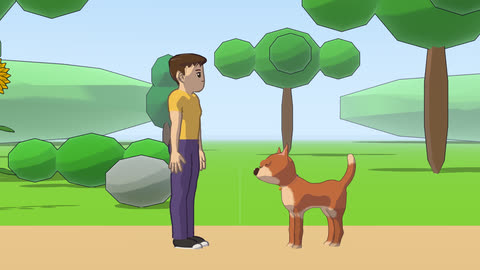 Head tiltAn animal tilts its head over to one side, its ears up, puzzled, holds it there, then straightens.
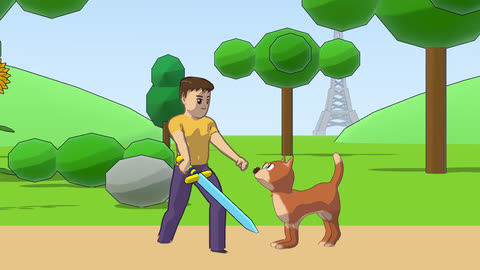 Heavy blowFrom the wind-up, the sword brought down with both hands and the whole body, folding at the waist with a step in, then back up to the guard.
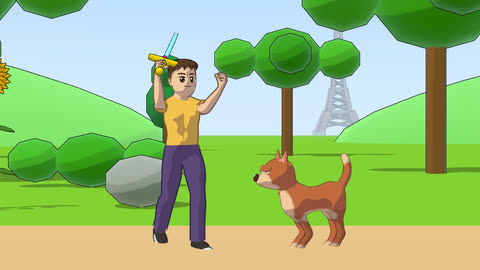 Heavy wind-upBoth hands take the sword up and back behind the head, the back arched and the weight on the back foot; it stays there, held, until the blow.
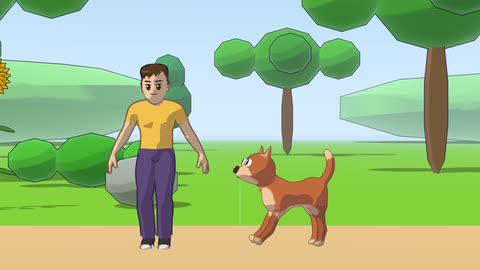 Hop on an arcA hop to its right and a hop back, the body on a curve through the air, the arms swinging round from the shoulders. It ends where it began.
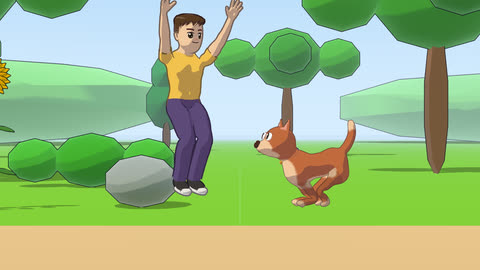 JumpA jump on the spot: a sink with the arms swung back, the spring up with the arms high, the knees tucked, and a landing that gives.
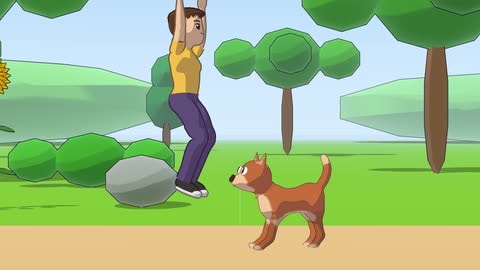 Jump with anticipationA deep sink with the arms swung back, a fast spring with the arms thrown high, a slow top, a fast drop, the knees taking the landing.
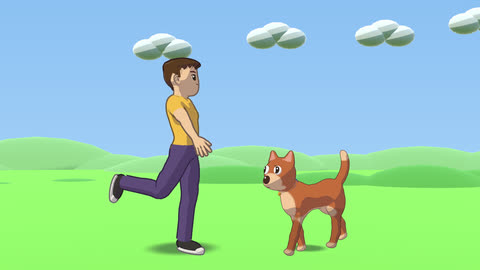 Kick a ballThe leg swings back, then forward fast with a flag right at contact, follows through a little further, then resets.
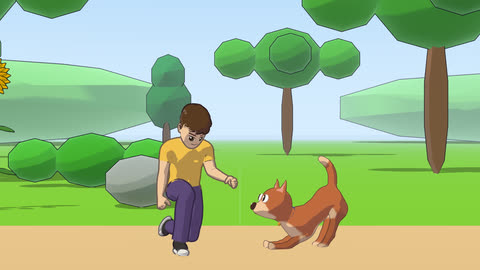 Kneel (yields)Beaten: the sword hand drops, the body sinks onto the back knee with the front foot planted, the head bowed. It stays down.
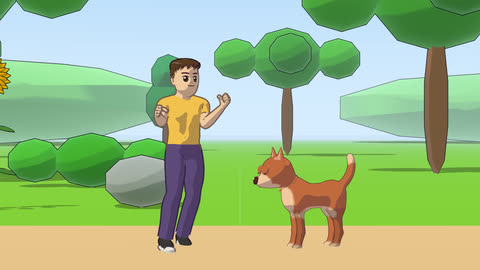 Lap waterHead down to the bowl and lapping, round and round: an animal on four legs drinks.
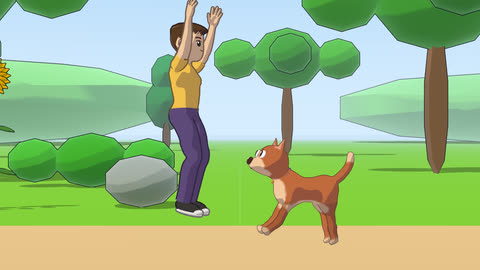 Leap with follow-throughA leap on the spot: the body lands and stops, but the arms swing on past, the chest bends on and the head dips after it, each settling in turn.
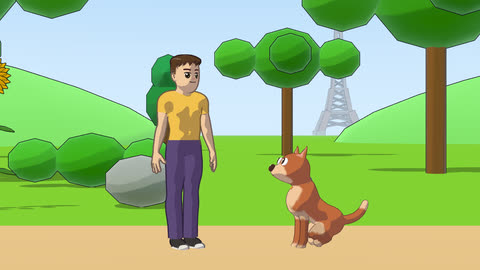 Lie downChest down first between the front paws, as in a bow, then the back end folding under, the front paws sliding forward: an animal lies down.
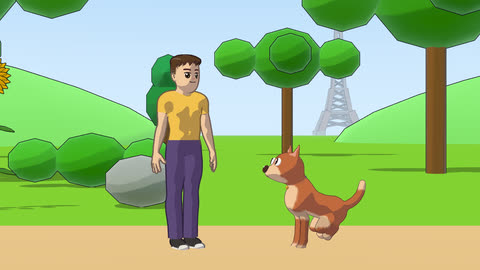 LoafSettles into a loaf as a cat does: chest down, front legs folded under with the paws tucked back, back legs in, tail curled round beside it.
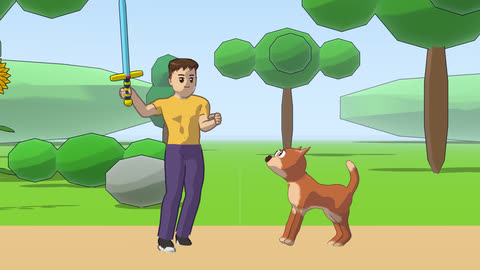 ParryA quick flick of the blade out across the incoming one, the wrist turning it aside, then back to the guard.
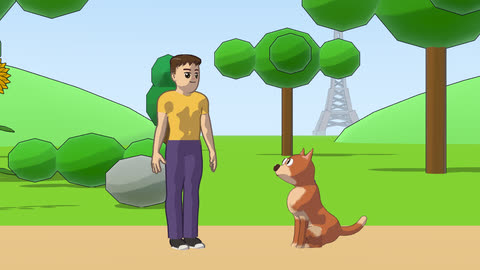 Paw waveSits, then lifts its right front paw up in front of it and waves it, happy, round and round.
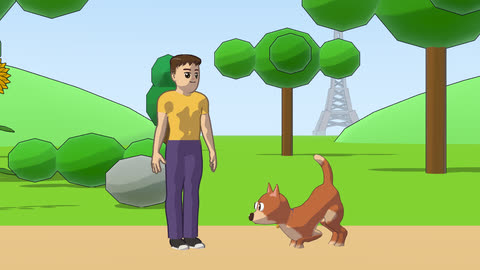 Play bowChest down between the front paws, back end up and tail high, then up again: a dog asking to play.
 Play deadDown and over onto its side, its legs out, still: an animal on four legs plays dead.
 Point (four legs)Nose forward and level, one front paw lifted and folded back, tail straight out: a pointer dog points. It stays so.
 PounceCrouches low, back end wiggling, then leaps forward, front paws reaching, and lands: an animal on four legs pounces, as a cat does.
 Ready stanceFeet apart, knees bent, hands up: it settles into the stance once, then holds it with a slow breathing sway. It stays ready.
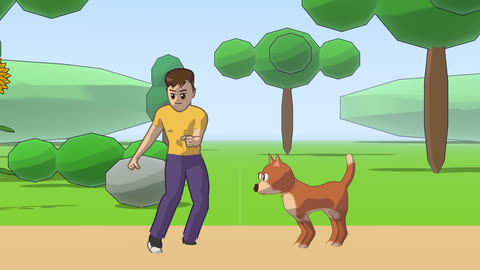 Rising cutFrom low on the sword side up across the body to high on the other side, the legs pushing up through it and the chest turning: a cut that rises.
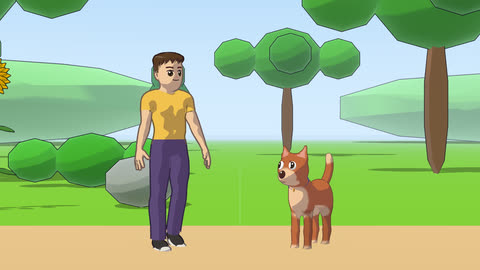 Side stepSteps out to one side on the beat, the weight going over and the other foot tapping in, then the same to the other side: round and round.
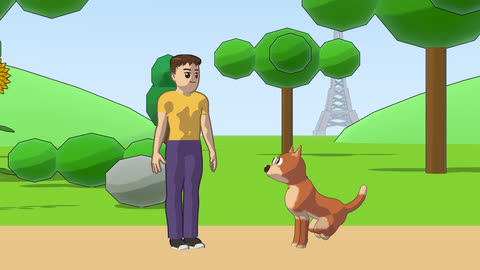 Sit (four legs)Back legs folding under, hips down, front legs straight, head up, tail on the ground behind: an animal on four legs sits.
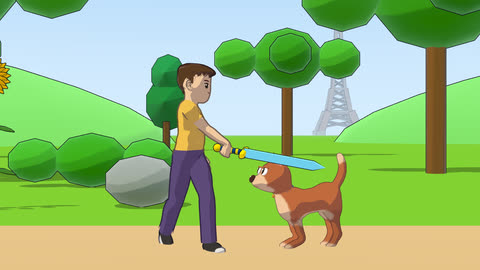 SlashFrom the guard, the sword cocked back over the right shoulder, then a step in and a diagonal cut across the front, high right to low left, the hips and chest turning through it.
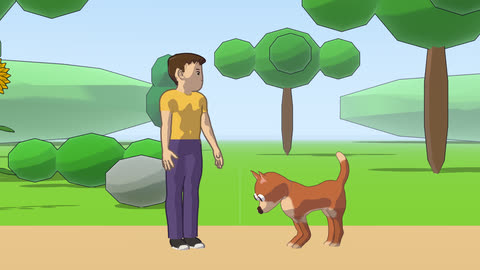 Sniff aroundNose down to the ground, sniffing one way and then the other, round and round: an animal on four legs on a scent.
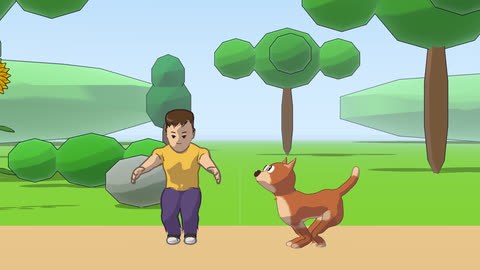 SquatsThe arms come straight out in front, then the knees bend deep and up again, round and round, the feet planted. A workout.
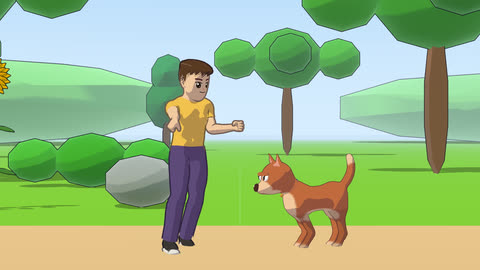 StabQuick and short: the blade drawn back a hand's width by the hip, then jabbed straight ahead, the elbow straightening and the weight driving forward a little, and back at once.
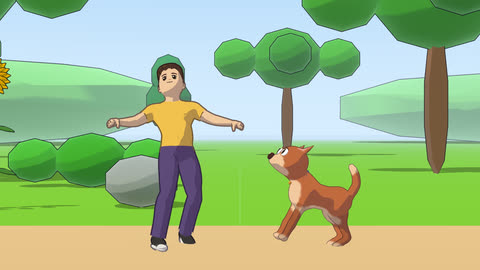 StaggerStruck: thrown back a step, the head snapped back and the arms flung out, the knees buckling, then catching itself back to the guard.
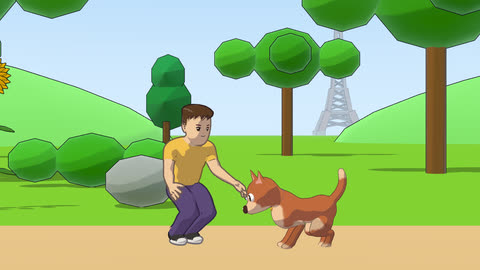 StalkLow on bent legs, head forward, eyes on its prey, creeping forward: an animal on four legs stalks.
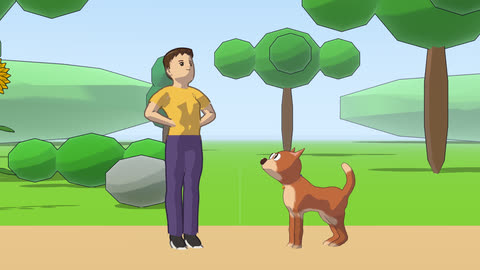 Stand proudChest up, head high, tail standing up, happy: an animal on four legs, proud. It stays so.
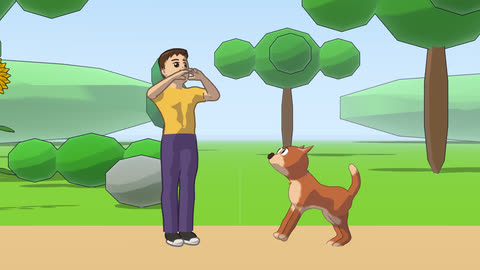 StartleSprings up and back, front paws off the ground, ears and tail up, then lands a step back: an animal on four legs, startled.
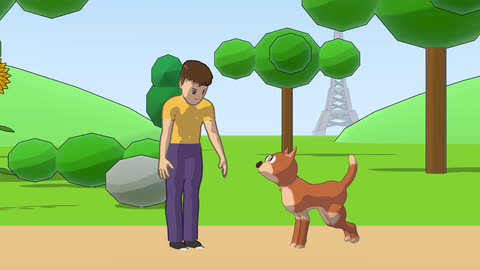 Stretch and yawnA long bow at the front with the head up, sleepy, then up and the back legs pushed out behind: an animal on four legs stretches.
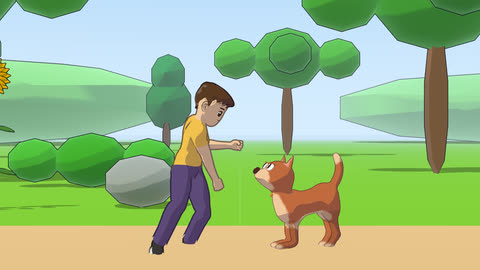 SweepLow and wide: the body drops into a crouch, the sword drawn back low, then swept across at knee height as the chest and hips turn through it.
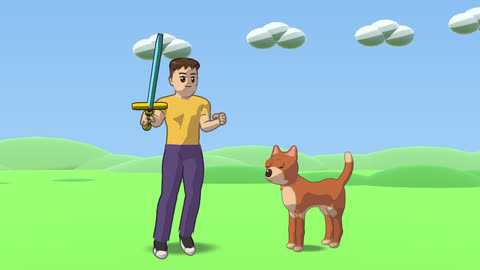
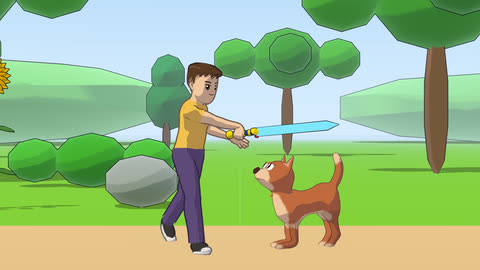 Sword swingWinds the arm back, swings hard, marks the moment it lands, then follows through and settles. Hit!
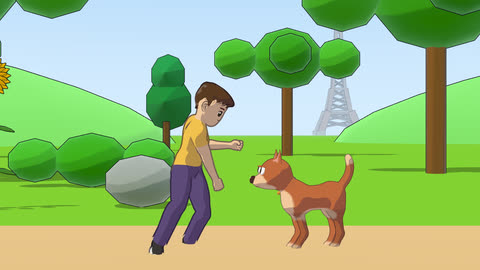 Tail sweepA creature with a long tail crouches, lifts its tail and curls it to one side, then whips it across behind it as its body twists the other way.
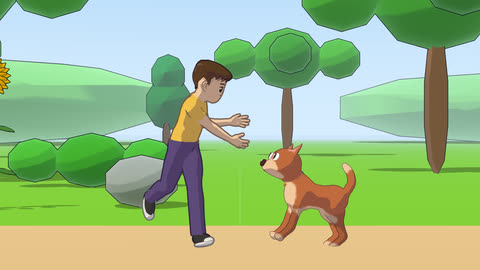 ThrowAn overhand throw: the arm up behind the head, a step, the release over the top, and the follow-through. Let go!
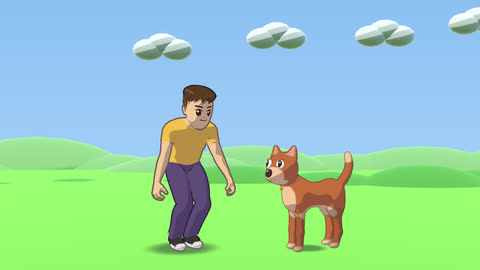 Throw a barrelBending to the barrel, lifting it over the head with both hands, a step in and both arms throwing it forward.
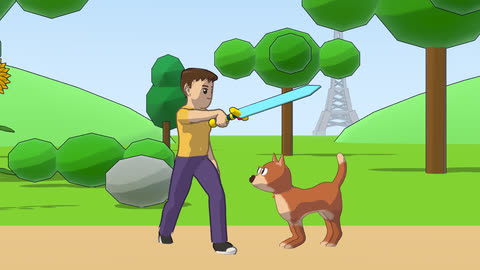 ThrustDrawn back by the right hip, the blade level ahead, then driven straight out at chest height with a deep lunge onto the front foot, the back leg long.
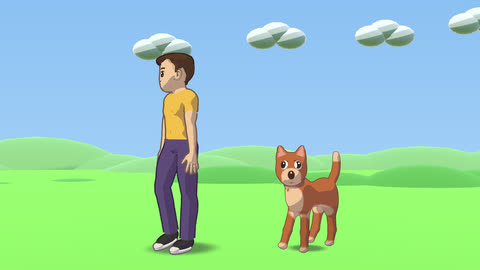 Turn to lookSomething off to the right is worth seeing: the head turns first, then the shoulders, then the feet step the body round; held, then back.
With someone else
Moves meant for two: a high five, a hug, a handshake. Each plays on one character; to have two characters meet in one, use Together's High five or Hug, which times both so they meet.
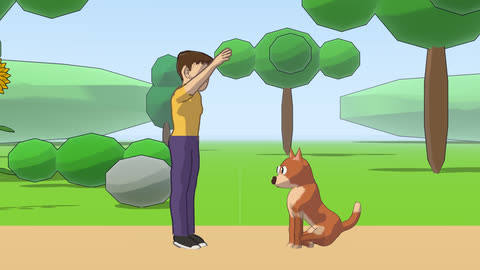 High fiveUp high: the right hand open, swung forward to slap at the moment marked touch, then a pleased little fist pump.
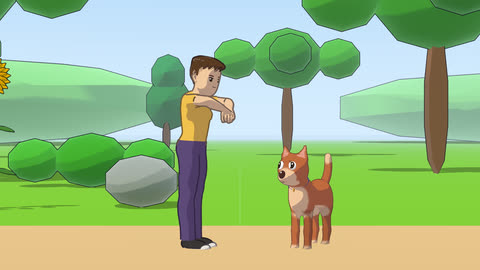 HugBoth arms open wide, a lean in, the arms wrapped round at the moment marked touch, a squeeze rocking side to side, then let go.
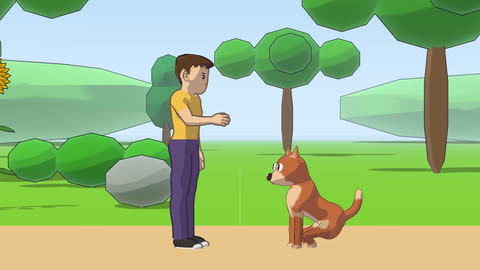 Shake handsHeld out at the waist, thumb up, the hand meets the other at the moment marked touch: three pumps and a nod, then let go.
Idle loops
Quiet moves for a character who is on screen but not the centre of attention, so it never freezes like a photograph. Still is here too, for props and for a deliberate hold.
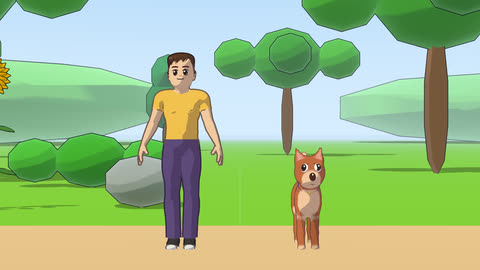 Arms foldedThe arms cross at the chest, each hand tucked by the other elbow, the body settling back a little and the chin up. It stays so.
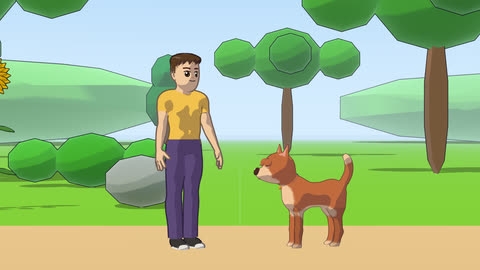 BreatheThe smallest sign of life: a slow breath in that lifts the chest and the shoulders, and out again. For waiting.
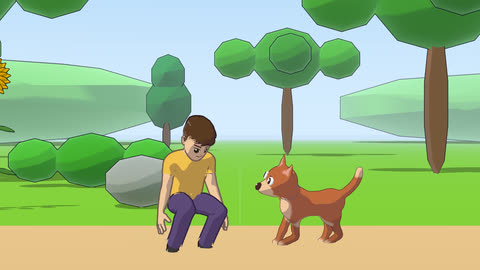
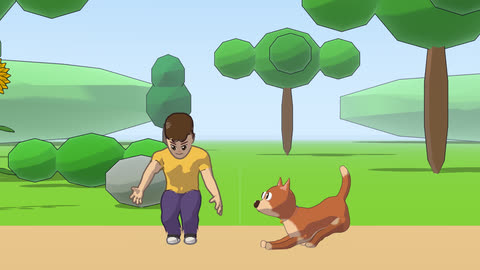 Crouch downThe knees bend deep, the body leans in, the head looks down and one hand reaches out low, as if to a dog or a cat. It stays down.
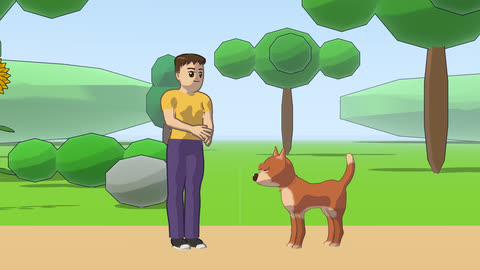 FidgetSomeone waiting for a bus: the weight shifting foot to foot, a glance each way, the hands fiddling.
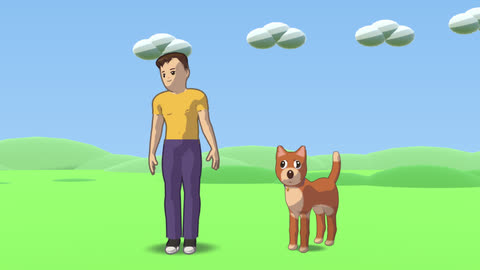 ListenThe head and the chest lean a little toward the speaker on its right and keep still, with a small nod now and then.
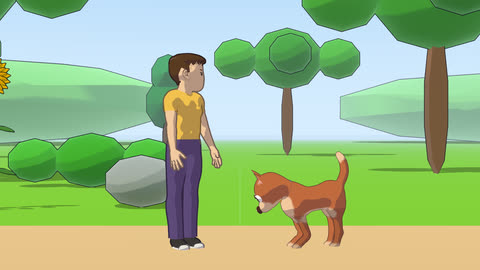 Look aroundThe head turns one way and the chest follows, a look, then across to the other side and back to the front.
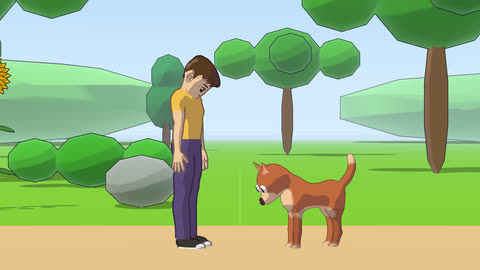 PeckA bird pecks at the ground: quick pecks of the head, a little hop and shuffle between them, round and round.
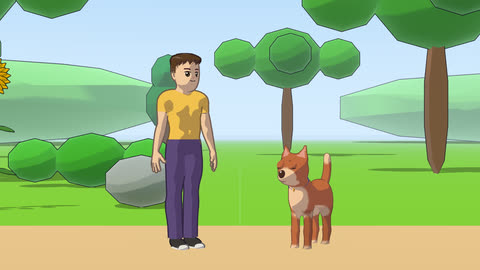 Stand stillNothing moves at all, not even a breath: a statue, a shop dummy, someone frozen to the spot.
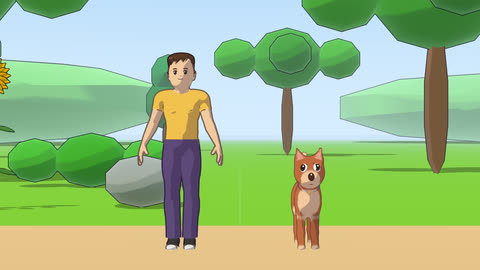 Wait (tap foot)The arms fold, the right foot taps, the left wrist comes up for a glance at the time; the arms fold again and the foot taps on.
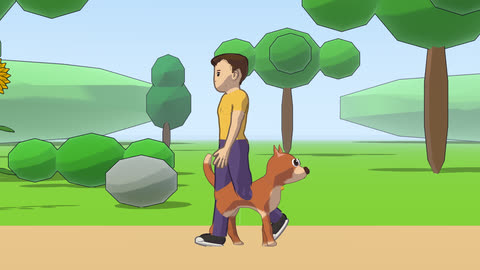 Walk back and forthA few steps on, a turn, a few steps back, a turn, round and round: a guard on patrol.
Talking and gestures
Moves for a character who is speaking or gesturing: one that follows the loudness of the voice, a wave, a held arm, an upright stance, a thought.
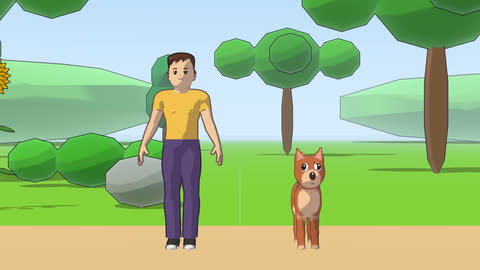 AgreeOne hand up in front of the chest, the thumb up, beats down firmly with a nod, then again a little smaller. Exactly.
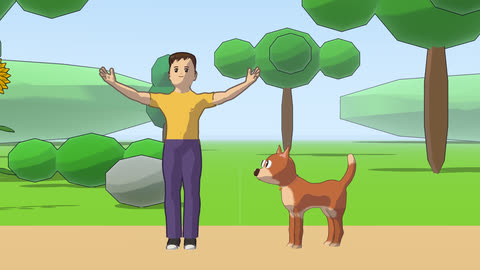 AnnounceThe arms gather in, then open wide and up, the chest lifted and the chin up; then a presenting pose, palms up, and open wide again.
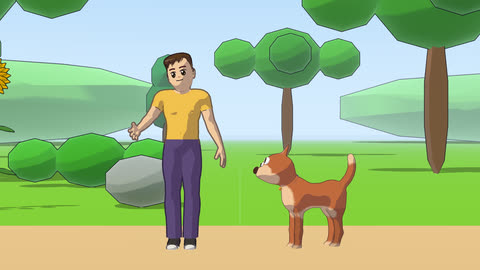 AskThe head tips to one side, the shoulders lift a little, one hand comes up and turns palm up, held, waiting for the answer.
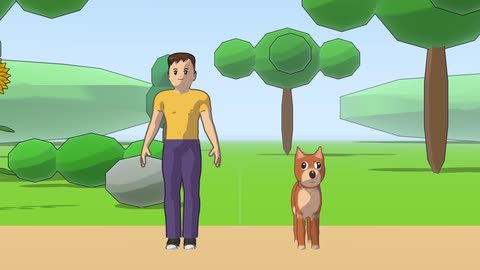 BeckonOne hand held out palm up curls in toward the body and opens again, twice, the head tipping to invite. Come here.
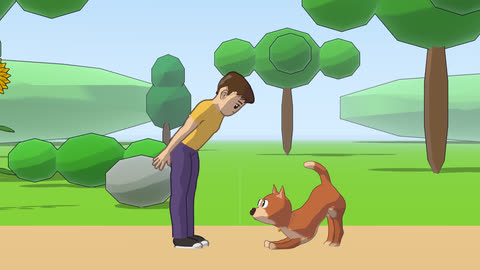 BowThe body bends forward from the hips, the back straight and the arms at the sides, the head following; a pause at the bottom, then up.
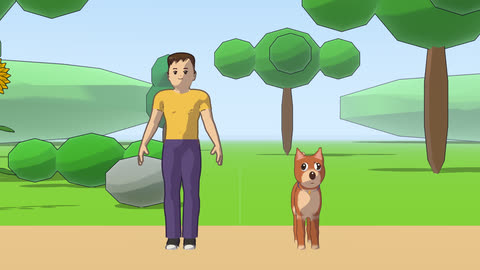 DismissA flick of the hand: up in front, then out and away to the side, the head turning off the other way, chin up. Never mind.
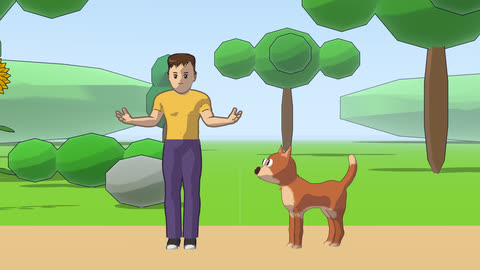 ExplainBoth open hands in front, shaping the idea: apart, together, wider still, the head nodding with each beat. The louder the line, the bigger.
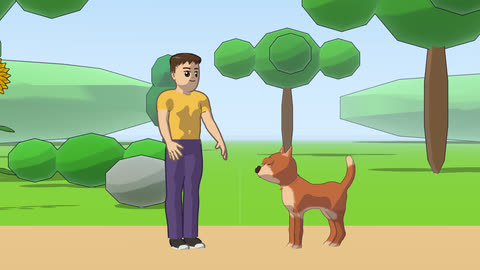 Hands on hipsBoth hands to the hips, the elbows out, the weight swaying and the head tilting: waiting, with attitude.
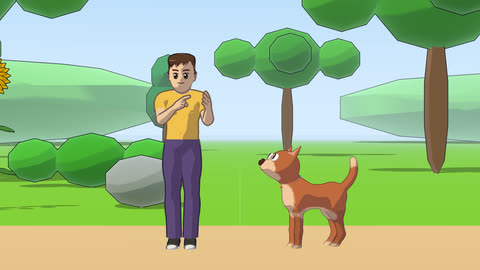 List on fingersThe left hand held up open, the right forefinger tapping it once, twice, three times, each a little higher, a nod with every count.
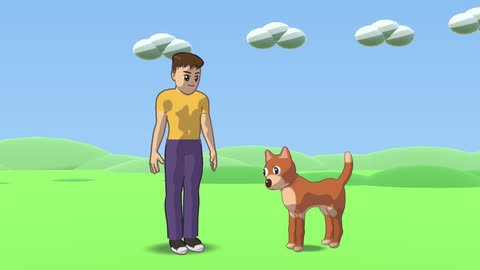 Nod yesThe head dips twice from the neck, the chin leading and the eyes on the listener, then comes back up. A clear yes.
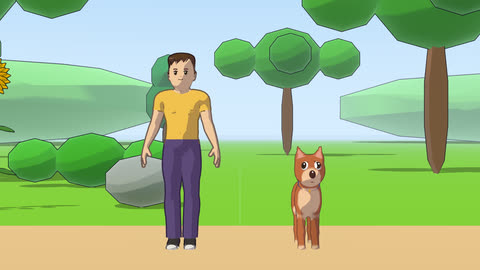 Nod, fast and slowThe same nod twice: in 0.3 seconds, an eager yes, then after a pause in 1.2 seconds, a thoughtful one. Only the timing changes.
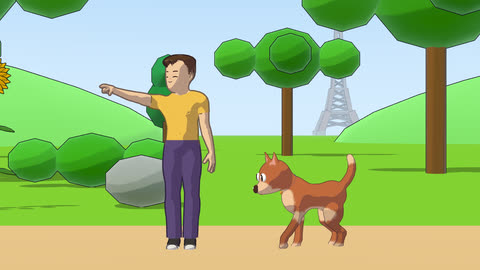
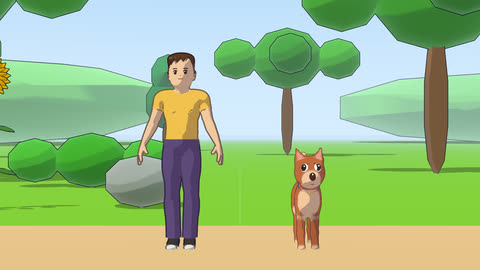 PointThe right arm comes up straight out from the shoulder, the hand pointing, the head turned first to look; held, then back down.
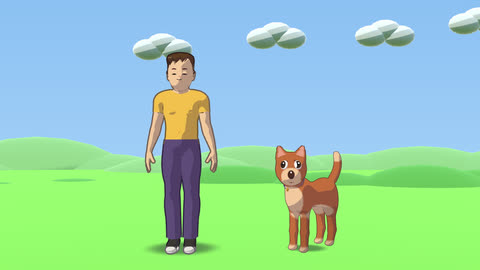 Shake head noSide to side three times, the head slowing at each end and smaller each time, the shoulders still. A clear no.
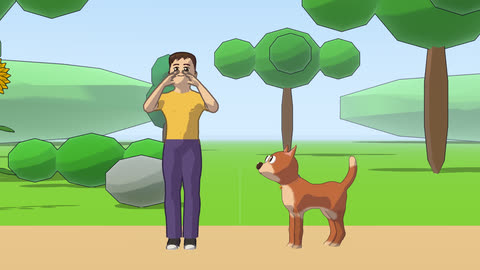 ShoutBoth hands come up cupped at the mouth as the chest draws back, then on the shout the chest and head push forward. The feet stay planted.
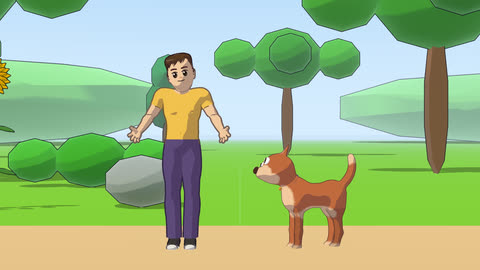 ShrugThe shoulders rise, the forearms open with the palms up and the head tips to one side; a moment held, then it all settles.
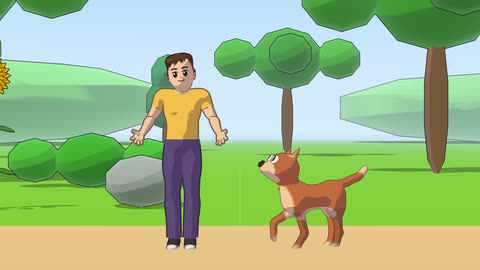 Shrug, then pointTwo small gestures under a line: a shrug, the palms up, then a look and a point off to the right. I don't know ... ask over there.
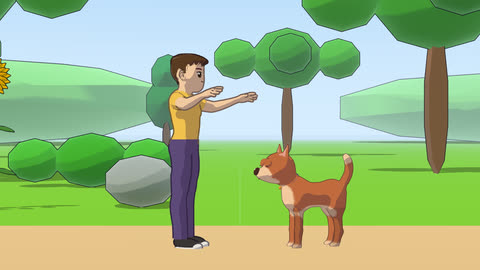 Snap clawsHolds the claws up and snaps them, one snap a beat: a crab’s claws, a person’s hands. The snap is flagged.
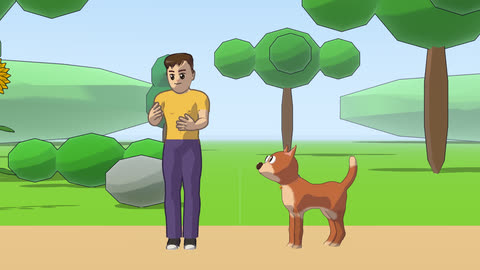 TalkThe hands beat in front of the body on the stressed words, one then the other, the head nodding with them. The louder the line, the bigger.
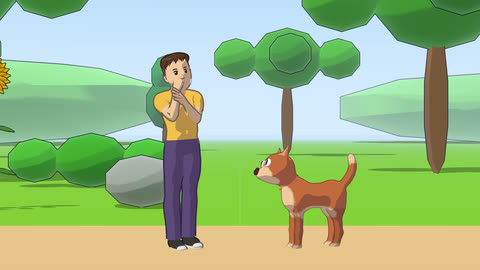 ThinkA hand to the chin, the other arm across under it, the head tilted and the eyes up: working it out.
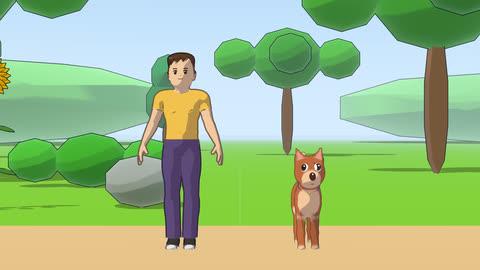 Thumbs upThe hand comes up in front of the chest in a fist, the thumb up, with a small nod, and it stays up. Well done.
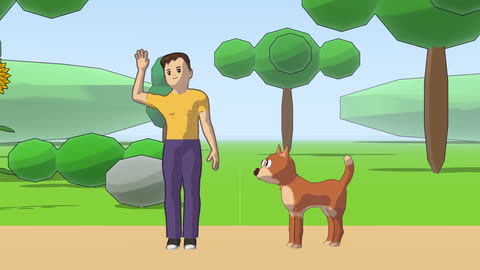 Wave and lookBeside the head, the right hand waves the forearm out and in from the elbow, the head tilted toward it, looking up.
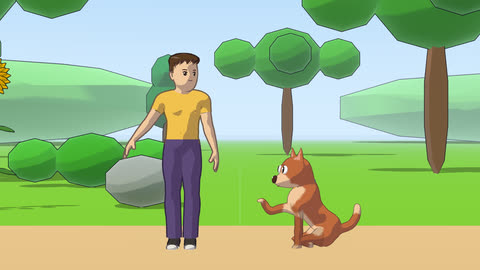 Wave goodbyeThe arm goes up high, the forearm upright, and waves big and slow side to side; then the hand comes down as the chest and the head turn away.
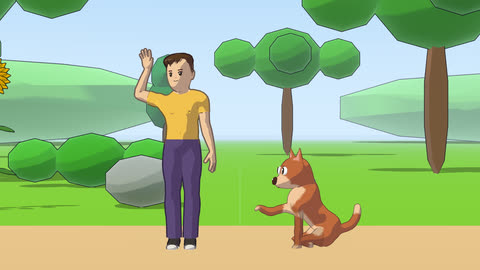 Wave helloThe right hand comes up beside the head, the forearm upright, and the wrist waves side to side for as long as it plays. A happy face.
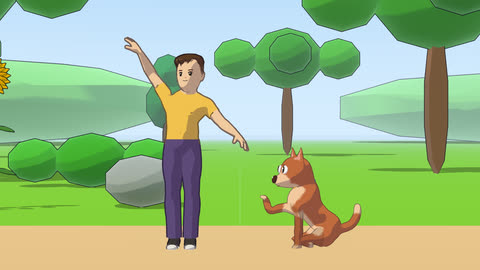 Wave, then a cartoon waveA person's ordinary wave, then the same wave pushed: the arm straight up and sweeping, twice as fast, the body and the head in it.
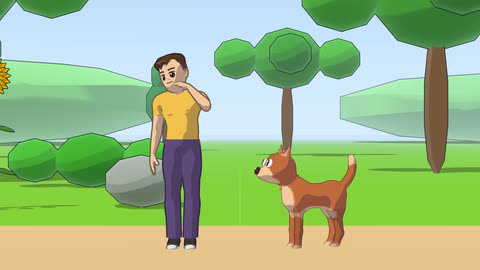 WhisperToward the listener the head turns and tips, the chest leans after it, one hand beside the mouth; held for the words, then back.
Dances
Moves to music and for showing off: the robot, a groove, a head bob, a slow sway, a floppy hop, a twirl and a spin. Most of them go round on the beat for as long as they play, so a whole song can be danced to one.
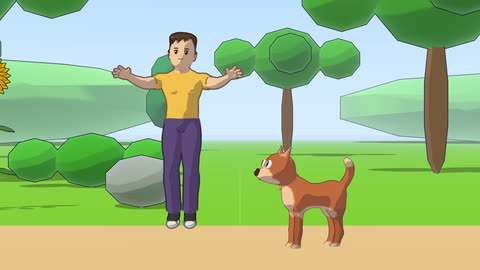 Floppy hopHappy hops on the spot, two a round, the arms trailing up as it lands and flopping down after, the head nodding.
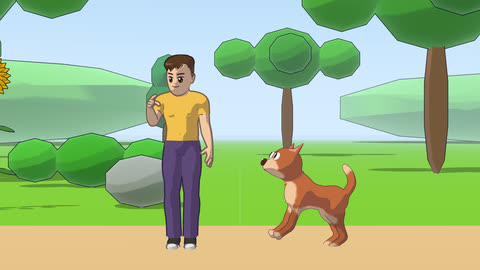 GrooveThe knees give on every beat, one hand and then the other gestures low in front on alternate beats, the head nodding.
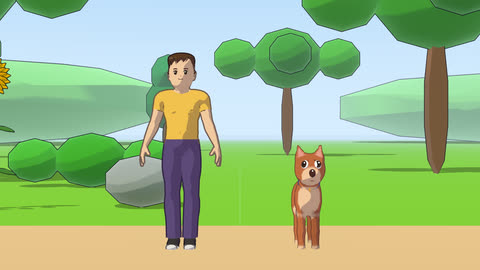 Head bobOne bob a beat: the head dips quickly and comes back up more slowly, the chest giving a little with each, for as long as it plays.
 RobotA new stiff pose on every beat: the arms bent in right angles, snapped into in a tenth of a second and held, the head clicking round.
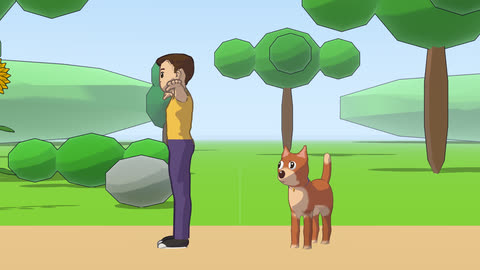 SpinThe arms thrown out level to the sides, once right round on the spot, then the arms back down.
 SwayThe weight goes slowly from one foot to the other and back, two beats each way, dipping a little in the middle.
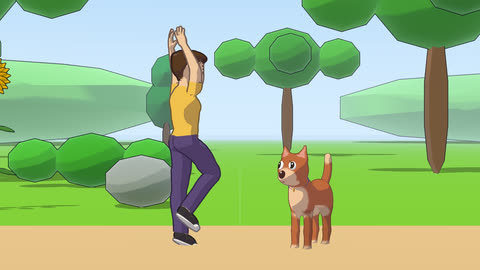 TwirlUp on one foot, the other knee raised and the arms curved over the head, once right round, then down facing front.
Game cycles and sitting
The moves a game plays on a character, each in place, so the game moves the character and the move moves its legs: stand, walk, run, jump, fall, flinch, cheer, climb and swim, and sit down, sit and stand up. Each is written for a kind of body (people; short legs, as Pip's; birds; four legs; many legs, as a crab's), so the one for that kind keeps every body of it on its feet.
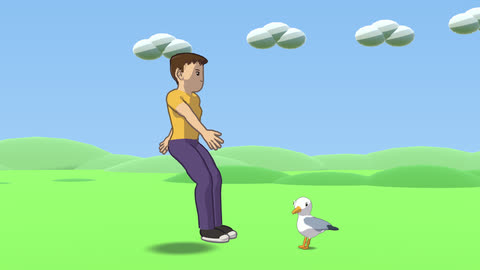 Cheer (bird, win)A little hop, wings up and flapping, beak open in a happy cry.
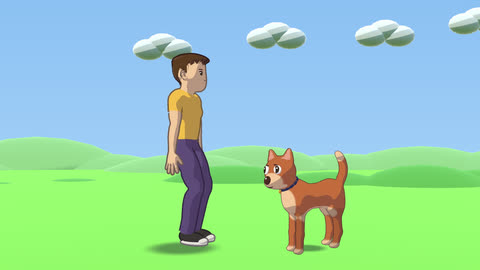 Cheer (four legs, win)A play bow, a bounce, tail wagging hard and a happy face.
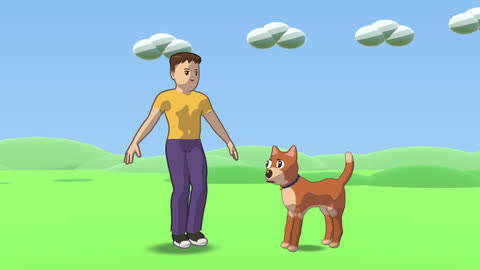 Cheer (many legs, win)Claws up high and snapping, two little hops and a happy face.
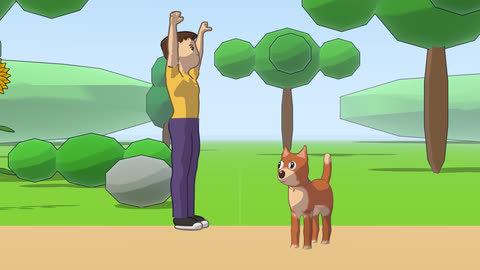 Cheer (win)Cheers: a little crouch, a spring with both arms up, two pumps of the fists and a happy face, then stands again: the win of the game cycles.
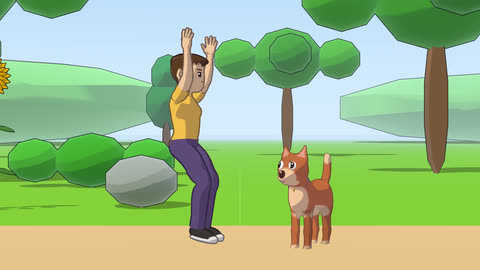 ClimbHand over hand, a knee up with each reach: the climb of the game cycles, as a World climbs a ladder or a rock face.
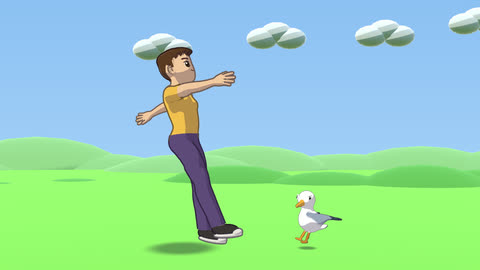 Climb (bird)Beats its wings hard and grips with its feet in turn, body tipped up.
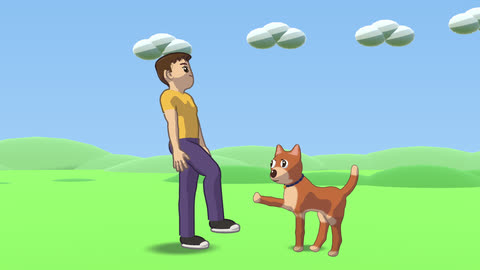 Climb (four legs)Reaches up with its front legs in turn and pushes with its back legs, body tipped up.
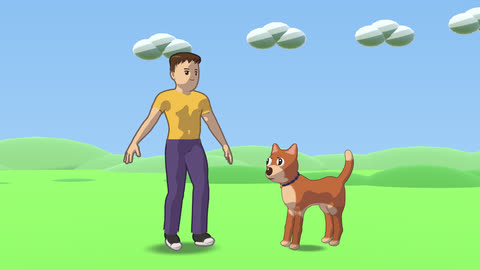 Climb (many legs)Claws reach up in turn while the legs pull up in alternating sets.
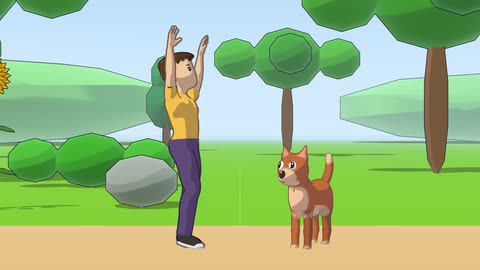 FallArms up and out and waving, legs reaching down and kicking, surprised: the fall of the game cycles.
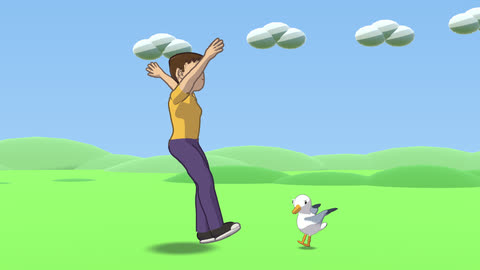 Fall (bird)Flaps its wings hard, legs dangling, beak open: the bird's falling loop, every half second.
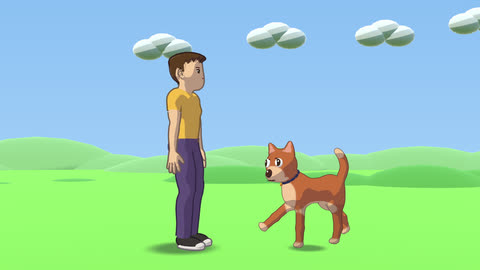 Fall (four legs)Legs spread and paddling, ears and tail up: the four-legged falling loop, every 0.6 seconds.
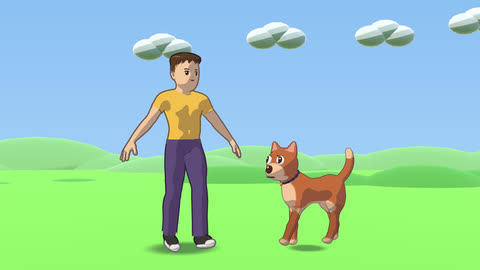 Fall (many legs)Legs flailing, claws up and waving, for as long as a game needs the fall to last.
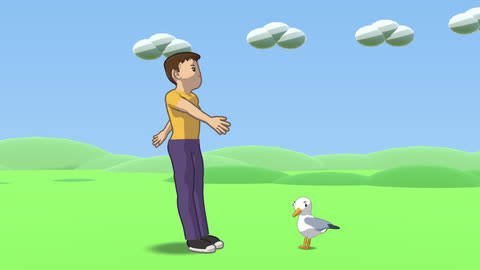 Flinch (bird, hurt)Wings up, eyes shut, a quick recoil from a hit, back to standing in 0.4 seconds.
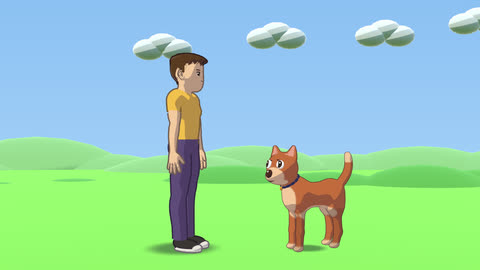 Flinch (four legs, hurt)Ducks its head and drops its rear, tail tucked, back to standing in 0.4 seconds.
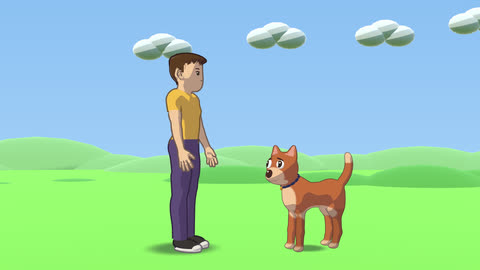 Flinch (hurt)A quick recoil from a hit, eyes shut and arms thrown up, back to standing in 0.4 seconds.
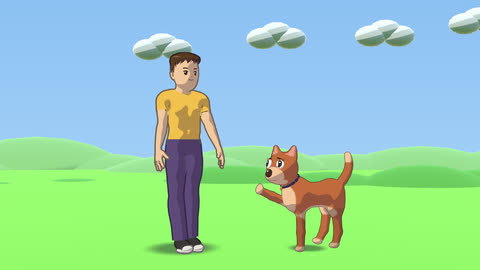 Flinch (many legs, hurt)Ducks low on spread legs, claws pulled in, eyes shut, back to standing in 0.4 seconds.
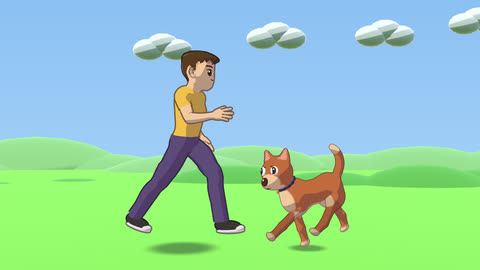 Hop-run (in place)Quick bounding hops with a forward lean, the tail out behind to balance.
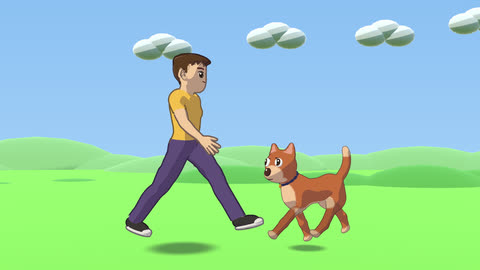 Hop-walk (in place)A step a hop, the tail swinging to balance: the walk of the game cycles for short legs.
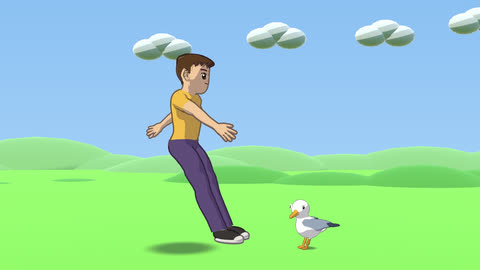 Jump (bird, in place)Crouches, springs with a beat of its wings, spreads them at the top, flaps down to land.
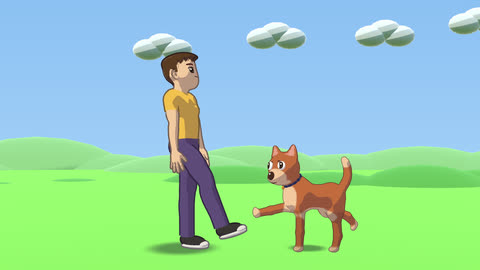 Jump (four legs, in place)Front legs reach out as it crouches and springs, then it stretches, tucks and lands.
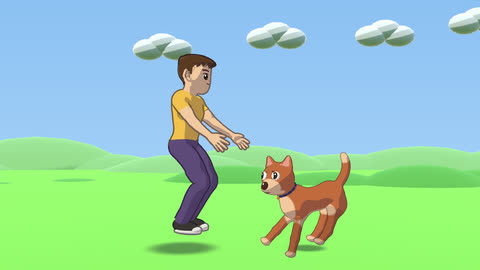 Jump (in place)Crouch, spring, hang at the top, fall and land, in phases a game can start from or hold partway through.
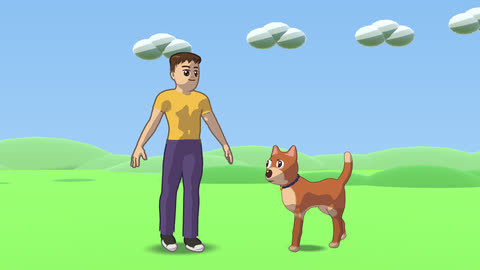 Jump (many legs, in place)Crouches low on spread legs, springs with its claws up, tucks and lands spread out.
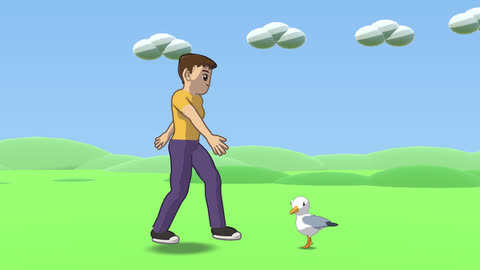 Run (bird, in place)Leans forward, wings half open and flapping, head thrust out, running in place.
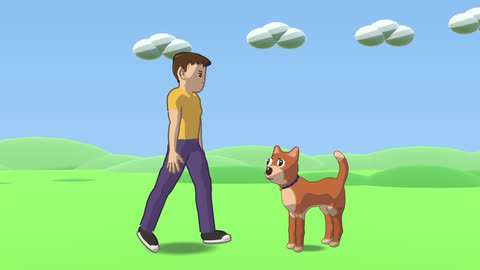 Run (four legs, in place)A bounding trot, diagonal pairs reaching far, body rocking, tail streaming.
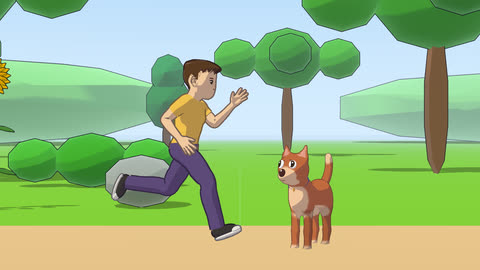 Run (in place)Runs in place with a forward lean, long strides and the arms bent and pumping against the legs, a little lift at each stride: the run of the game cycles.
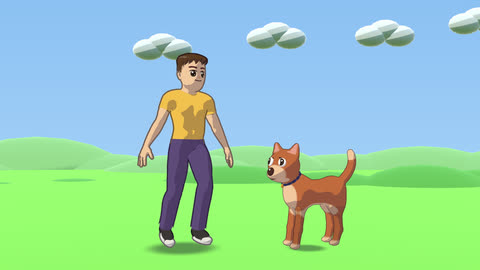 Run (many legs, in place)Legs a blur of alternating sets, claws held up and back.
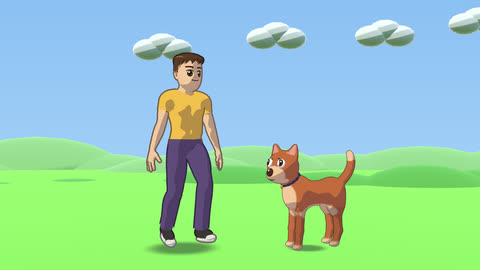 Scuttle (many legs, in place)Legs stepping in two alternating sets, claws held up and swaying.
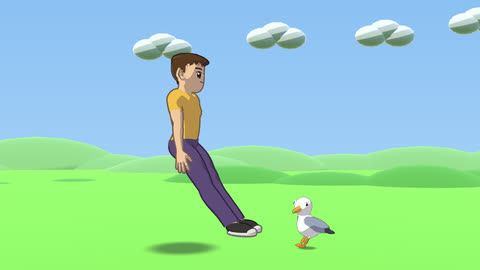 Settle down (bird)Settles onto its folded legs and fluffs its wings, the same on the ground, a perch or a ledge.
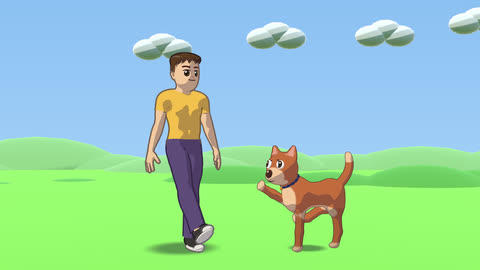 Settle down (many legs)The shell settles down onto the ground on spread legs, claws resting.
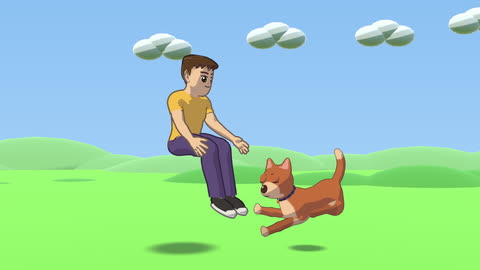 SitStaying seated, breathing and blinking, looping every 4 seconds until a game stands it back up.
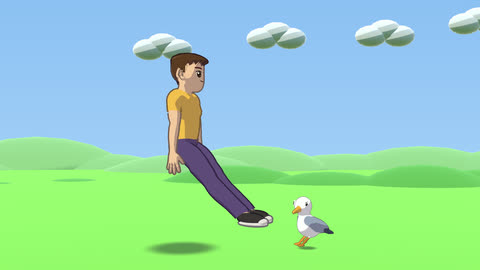 Sit (bird)Settled on folded legs, breathing, blinking and looking about, looping every 4 seconds.
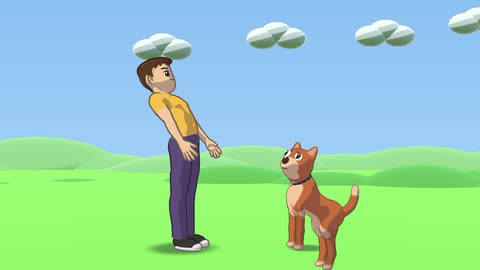 Sit (four legs)Rear down on its folded back legs, it breathes, blinks and wags its tail now and then, every 4 seconds.
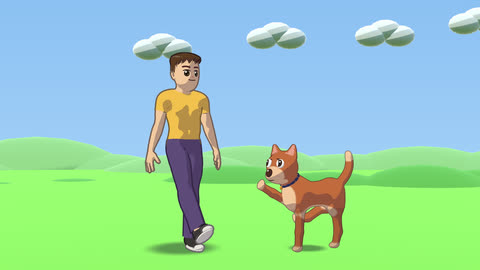 Sit (many legs)Settled on spread legs, breathing and blinking, a claw tapping now and then.
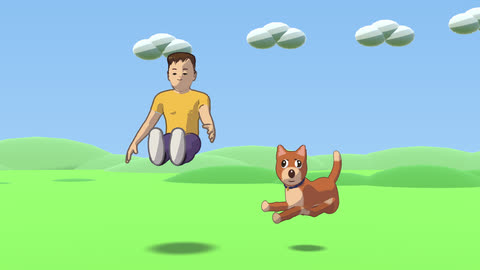 Sit (seen from the front)Staying seated and breathing, drawn facing the camera, looping every 4 seconds.
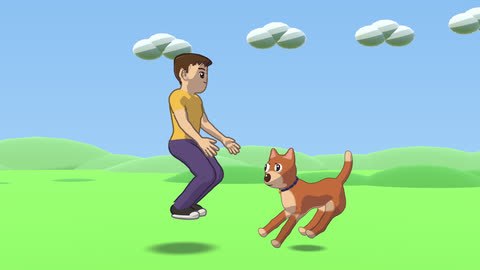 Sit (short legs)Sitting on folded legs, it breathes, blinks and twitches its ears, looping every 4 seconds.
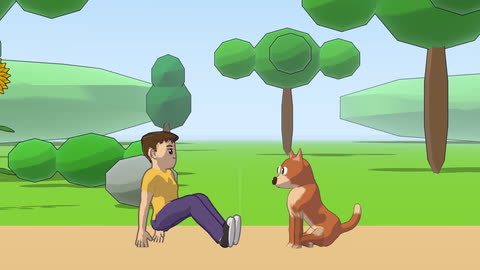 Sit downSits down on the ground: a squat over the feet, then the hips down and back, the knees up, the feet flat in front and the hands behind on the ground.
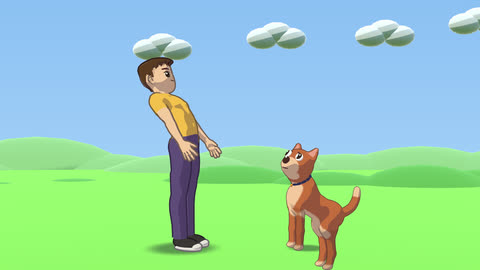 Sit down (four legs)The rear comes down onto folded back legs, the front staying up on straight legs.
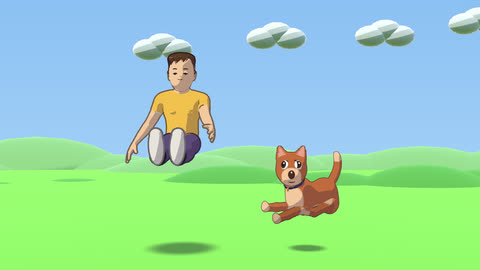 Sit down (seen from the front)The sit-down drawn facing the camera, the thighs coming toward you as the knees bend.
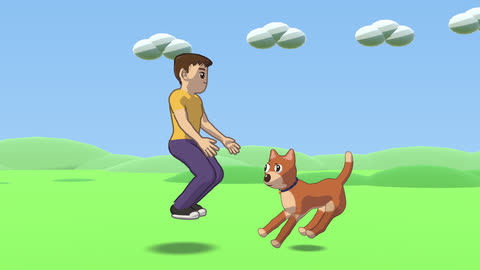 Sit down (short legs)Folds down onto its short legs, tail out behind, paws resting where they stood.
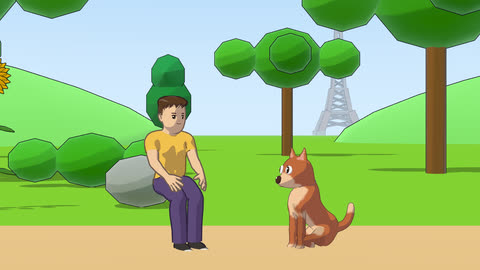 Sit in a chairSits down onto a chair behind: the hips go back and down over the feet, the body leaning forward, until the seat takes them; then upright, the hands on the thighs.
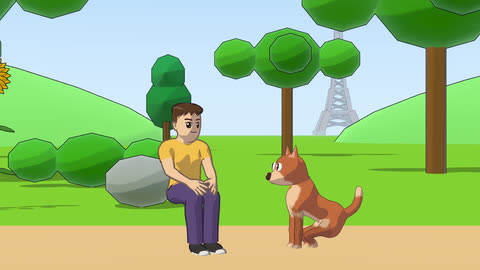 SittingSeated on a chair and staying there, breathing: the shoulders rise a little and fall, the head with them, every 3.2 seconds.
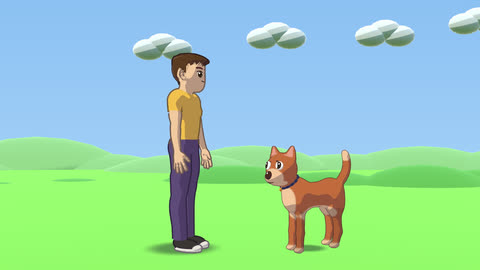 Stand and breatheThe resting pose of the game cycles: a slow breath, a small sway and a blink, looping every 4 seconds.
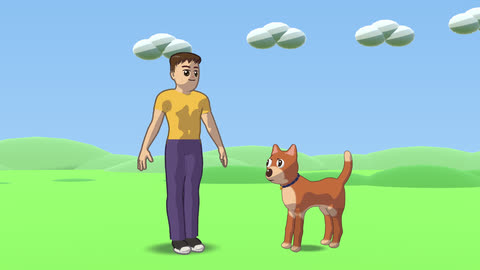 Stand and breathe (many legs)Claws held up and opening a little, legs shifting now and then, looping every 4 seconds.
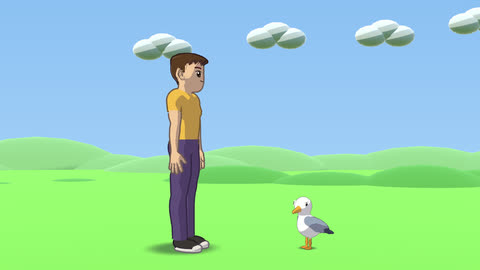 Stand and look about (bird)Breathing, blinking and bobbing its head sharply, wings settled, looping every 4 seconds.
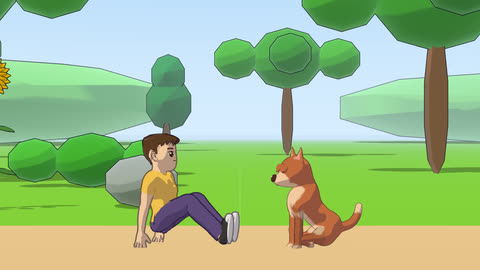 Stand upStands up from sitting on the ground: the feet drawn in, the body rocked forward over them with the arms reaching out, a squat, then up.
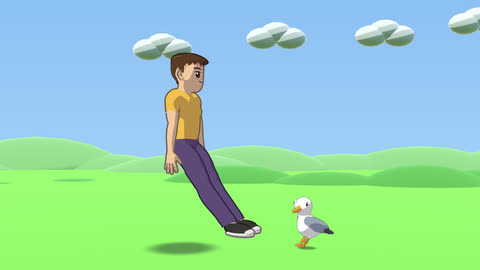 Stand up (bird)Straightens its legs from sitting and gives its wings a little shake.
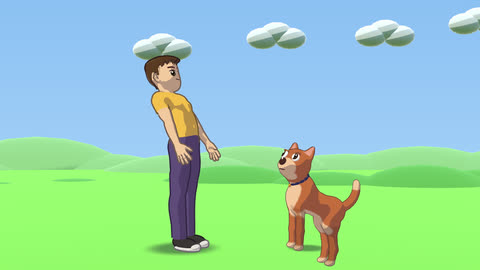 Stand up (four legs)Lifts its rear back onto straight legs from sitting.
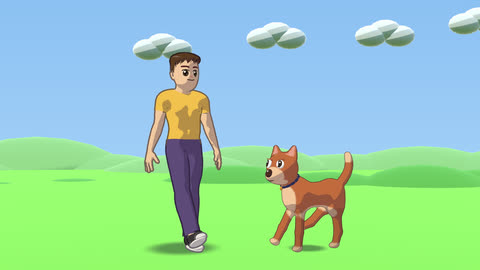 Stand up (many legs)The legs push the shell up and the claws lift, rising from sitting.
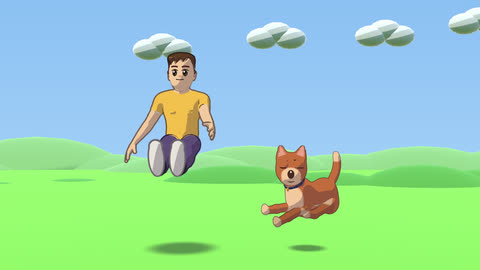 Stand up (seen from the front)The stand-up drawn facing the camera, rising from a seat back to an ordinary standing pose.
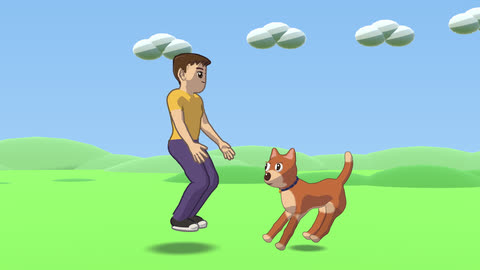 Stand up (short legs)Unfolds from its settled legs with a little shake of the tail.
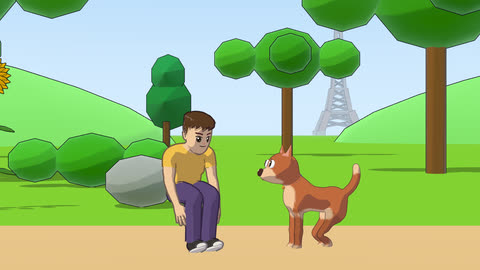 Stand up from a chairUp out of a chair 45 cm high: the feet drawn back under the knees, the body leaning well forward over them, then up, the arms coming down to the sides.
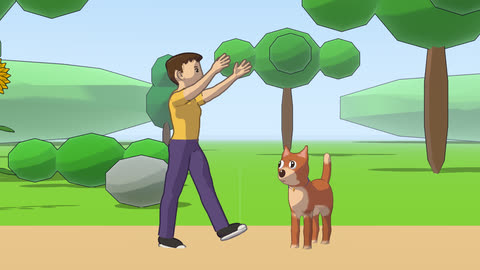 SwimArms reaching over in turn and pulling back, legs kicking: the swim of the game cycles, as a World swims.
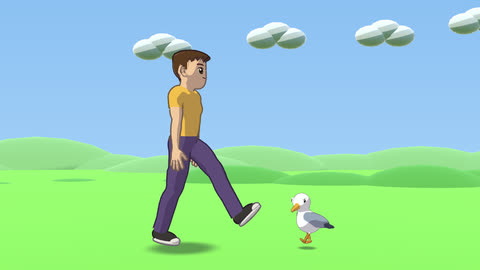 Swim (bird)Floats and paddles its feet in turn under it, wings folded, head bobbing.
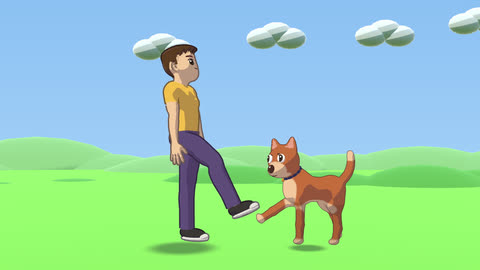 Swim (four legs)Paddles with its front legs in turn and kicks with its back legs, head held up.
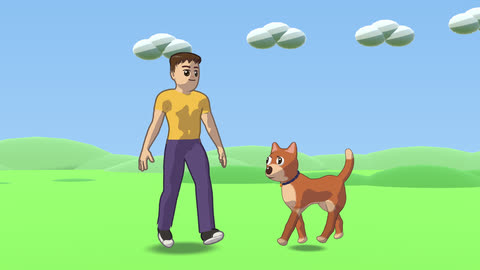 Swim (many legs)Paddles its legs one after another from back to front, claws held forward.
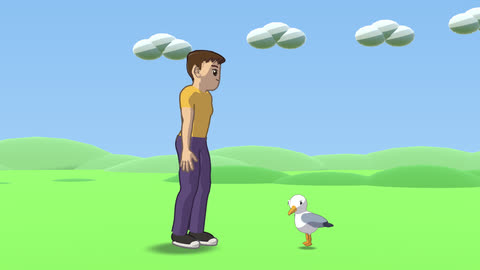 Waddle (bird, in place)A quick waddle, the head bobbing sharply to each step, wings held a little out.
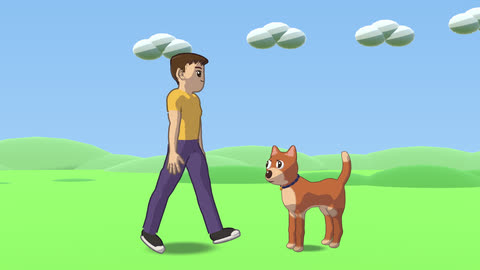 Walk (four legs, in place)Steps in diagonal pairs, paws flat in stance, head and tail swaying.
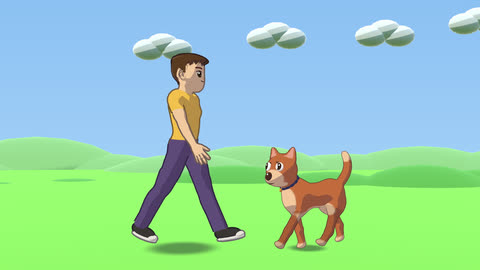 Walk (in place)The game's walk gait: a stride fitted to its own speed, the planted foot never sliding, stepping in place for as long as a game holds it down.