Head bob
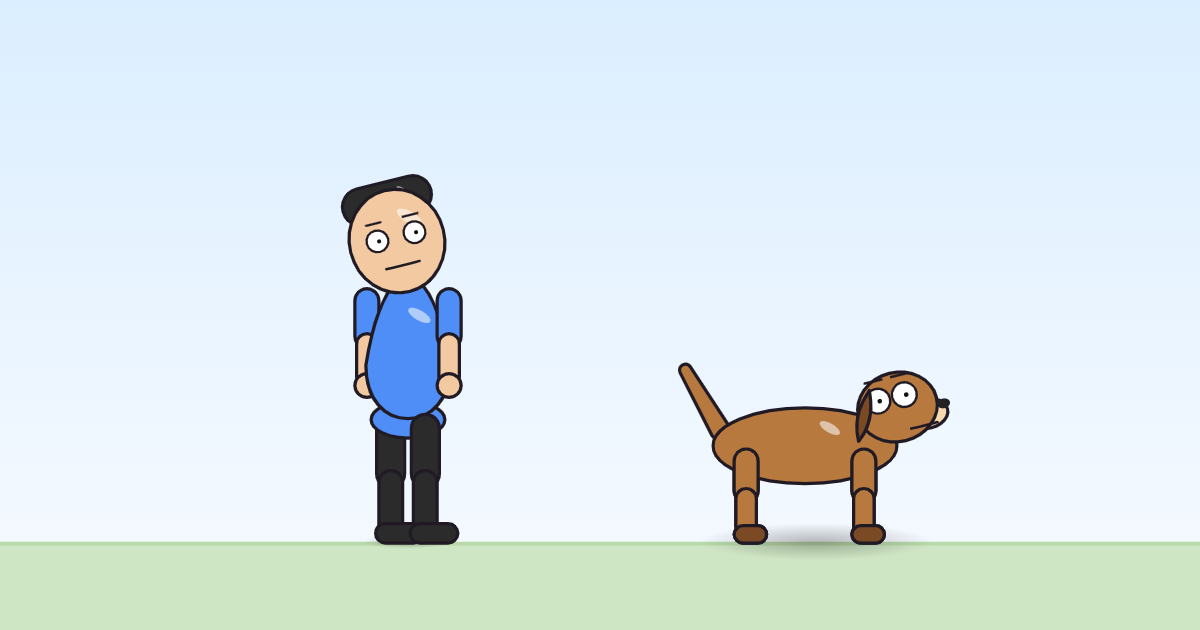
The head dips 14 degrees in a sharp twelfth of a second and eases back up over a slower stretch, repeating on the beat for as long as the move plays.
Use it in a cartoonOpen it in the block editorThe pack file (JSON)
What it is for
Head bob is a small, steady nod to music, on its own or layered under another move, repeating for as long as it plays.
The principle it shows: timing
The head snaps down to 14° in a sharp 0.12 seconds, but takes a much longer 0.38 seconds to ease back up: the down-beat is fast and the recovery is slow. That imbalance is what makes the loop read as nodding along to a rhythm, instead of a head twitching evenly back and forth.
The program, line by line
when it starts
  forever:
    glide head 14, head lift -3, dy 2 over 0.12 s (out)
    glide head 0, head lift 0, dy 0 over 0.38 s (inout)
when it starts— begins when the move is put on a character.forever:— the bob repeats for as long as the move plays.glide head 14, head lift -3, dy 2 over 0.12 s (out)— the head dips 14 degrees and lifts a little on its own as the whole body nudges down slightly, sharp and fast.glide head 0, head lift 0, dy 0 over 0.38 s (inout)— and eases back level over a much longer stretch, smoothly in and out.
Try this
Dip the head 30 degrees on every beat instead of 14. The nod becomes a big, enthusiastic bob instead of a small, steady one.
In the program:
ramp · to.part:head14→30Ease back up in a tenth of a second instead of 0.38, almost as fast as the dip down. The bob becomes jittery and nervous instead of relaxed.
In the program:
ramp · over0.38→0.1
How it differs from Nod yes and Flap wings
Nod yes is a deliberate single nod with a clear meaning; Head bob repeats forever and is about keeping time, not agreeing. Flap wings shares the same fast-down, slower-up shape, but on the wings and the whole body instead of the head alone.
Works on
| Body | Moves? | What moves |
|---|---|---|
| 2 legs (a person) | yes | head |
| 4 legs (a dog) | yes | head, ears |
| no legs (the monster with no legs) | yes | — |